Analyzing the cost and benefits of building structured parking out of wood
Parking structures are among the most common buildings we construct and among the most carbon-intensive. Their wide open interior spaces are, at the same time, both highly adaptable and very difficult to change. This study begins with that tension and asks how parking might be built differently today. For decades, parking structures have been treated as background infrastructure–optimized for efficiency, built almost entirely of concrete, and rarely designed with a future beyond vehicle storage. How might these structures respond to climate and long-term adaptability while still meeting the demands of today?
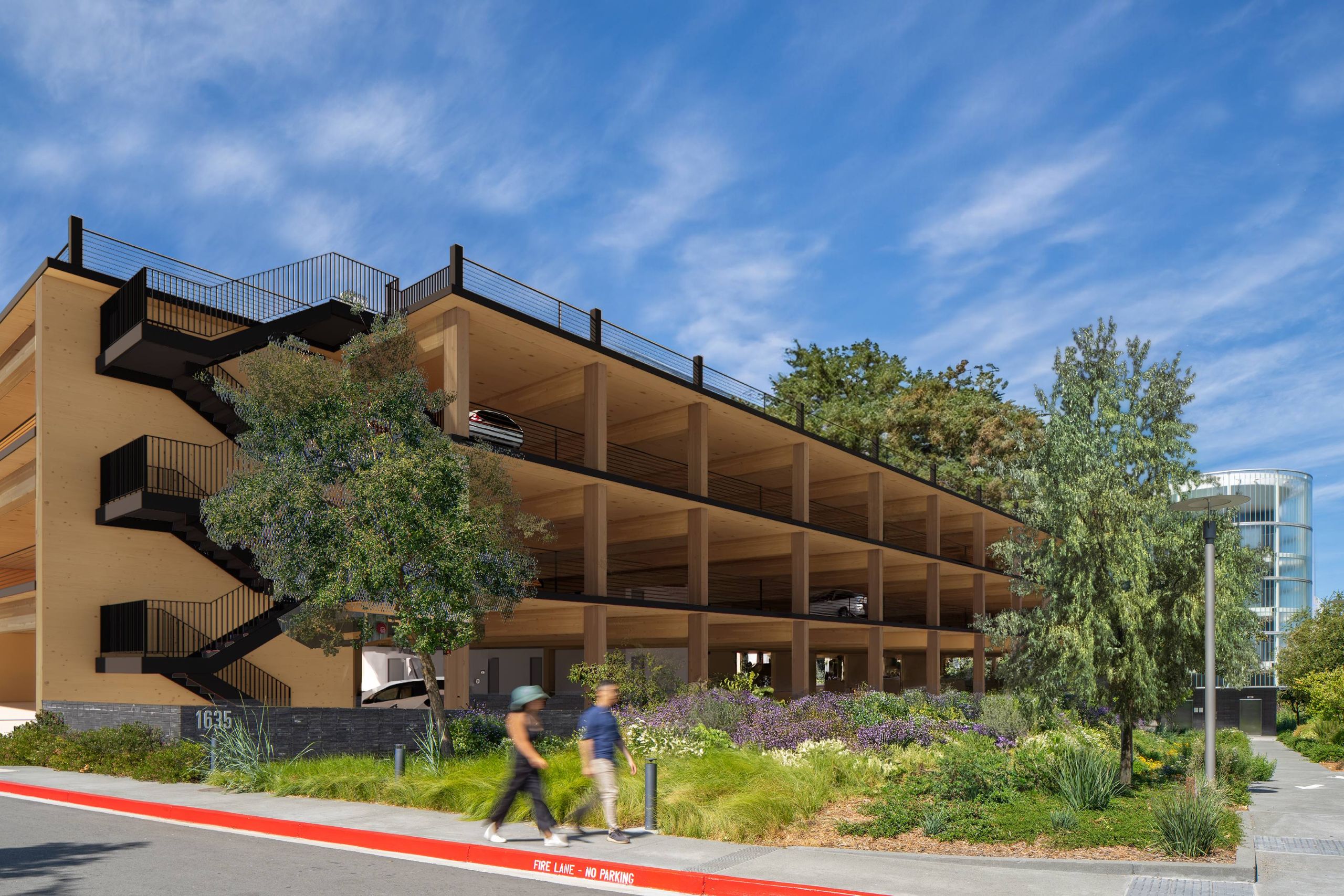
Developed in collaboration with Truebeck, Holmes, Walker Consultants, and Stantec, this study imagines a mass timber parking structure–given today’s techniques, constraints, and market realities–and finds it a surprisingly viable alternative.

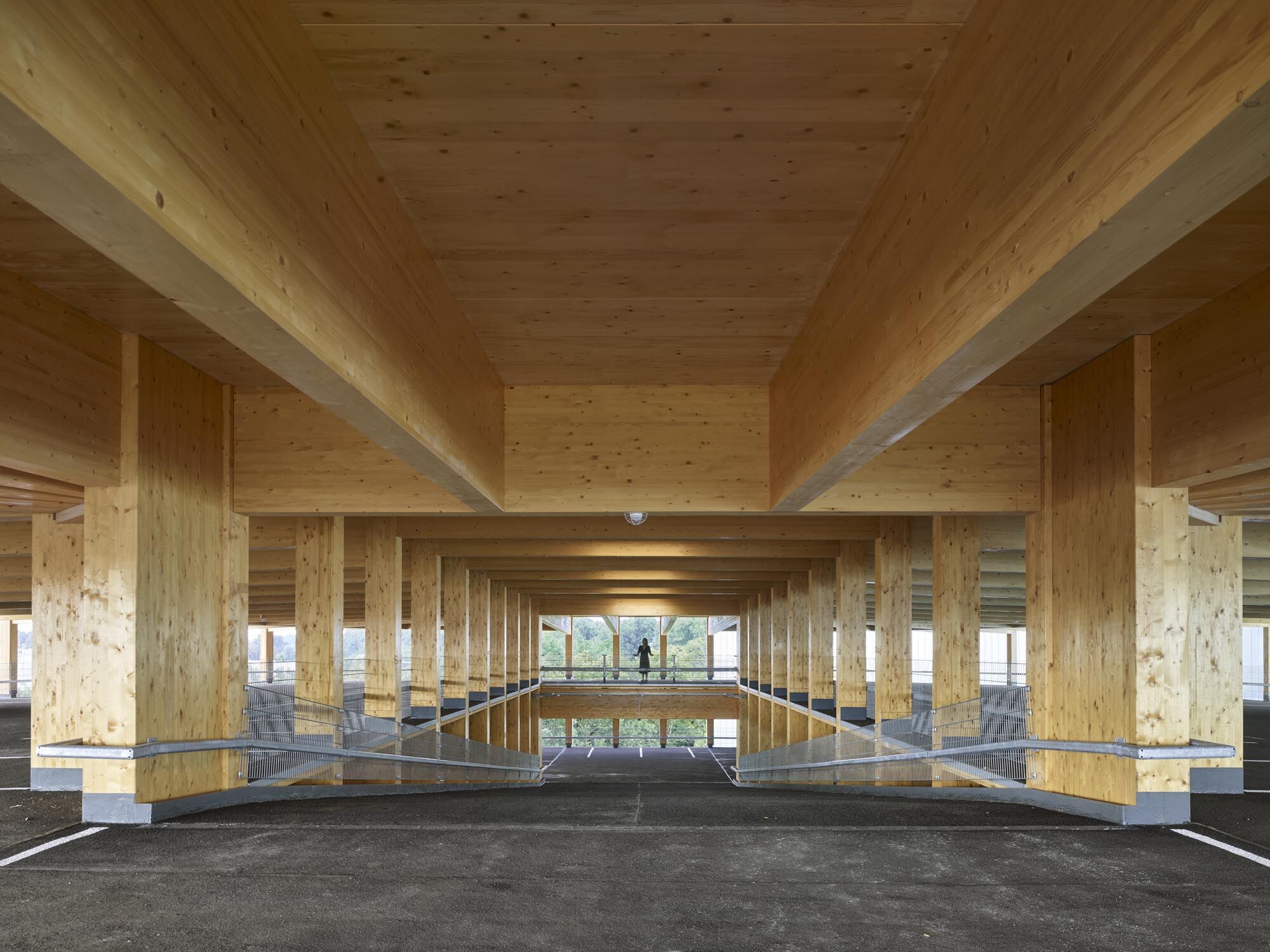
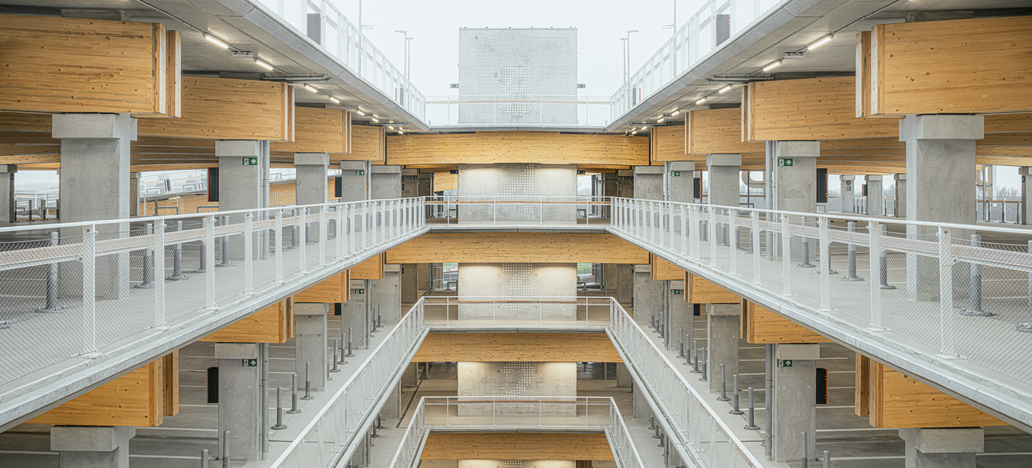
Exposed mass timber structure at the Wendlingen Parking Garage, Germany. Photo: Roland Halbe
“As mobility evolves, parking structures may disappear, persist, or transform into something else entirely. The only certainty is that their role will change.”
Why Mass Timber
Mass timber adoption is already visible across housing, workplace, and civic buildings. Parking remains one of the few major building types still dominated by concrete. That makes it an opportunity. Stand-alone parking structures rely on repetitive grids, open floor plates, and modular systems. These characteristics align with prefabricated timber systems and allow for direct comparison with conventional construction.
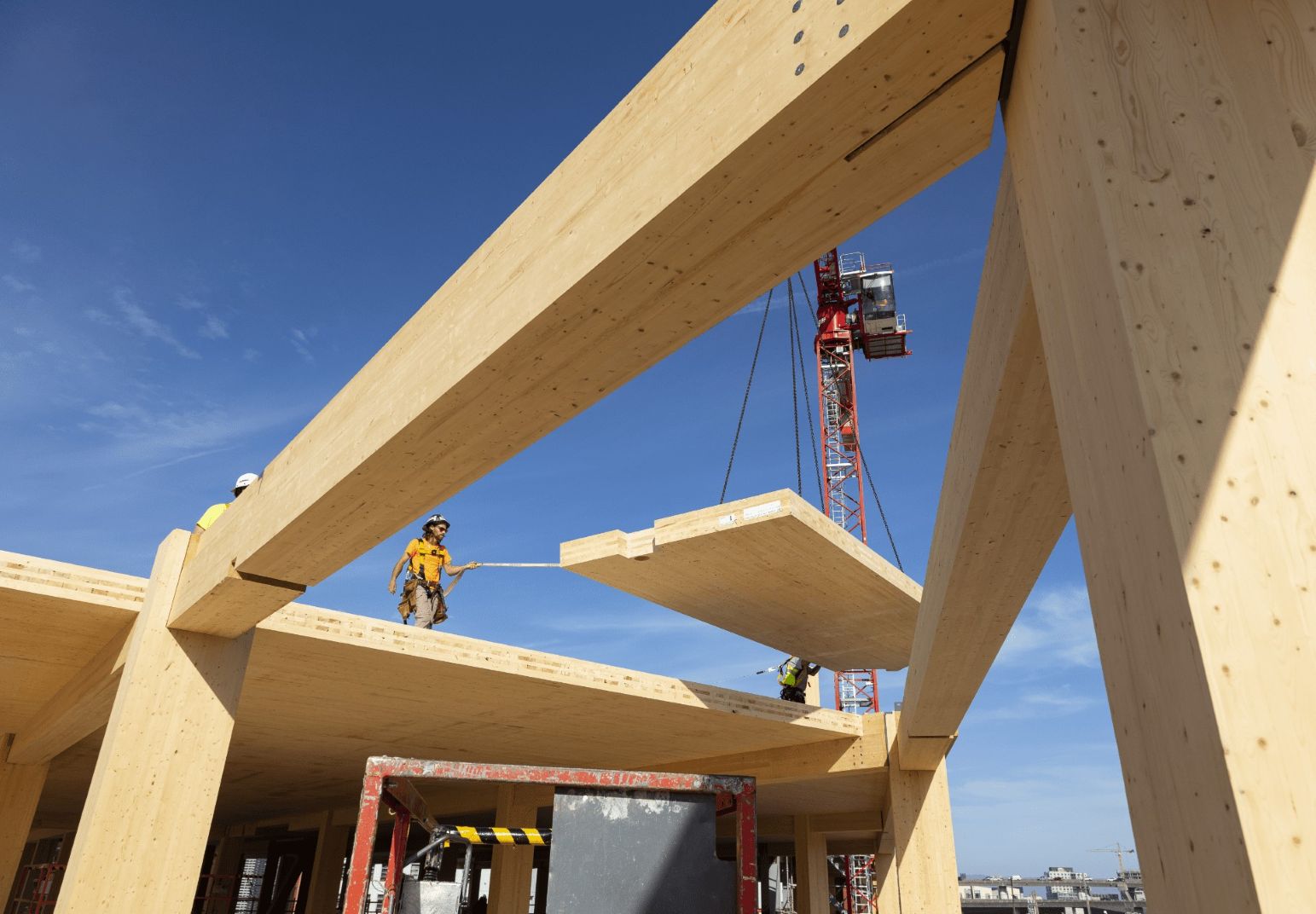
Approach: Testing against the baseline
Rather than speculating on idealized futures, this study begins with a recently completed concrete parking structure and asks a direct question: what if this building were constructed in mass timber? Program, layout, and code assumptions are held constant. Structural systems, materials, and assemblies are varied. This approach isolates how design decisions affect carbon, cost, efficiency, durability, and adaptability.
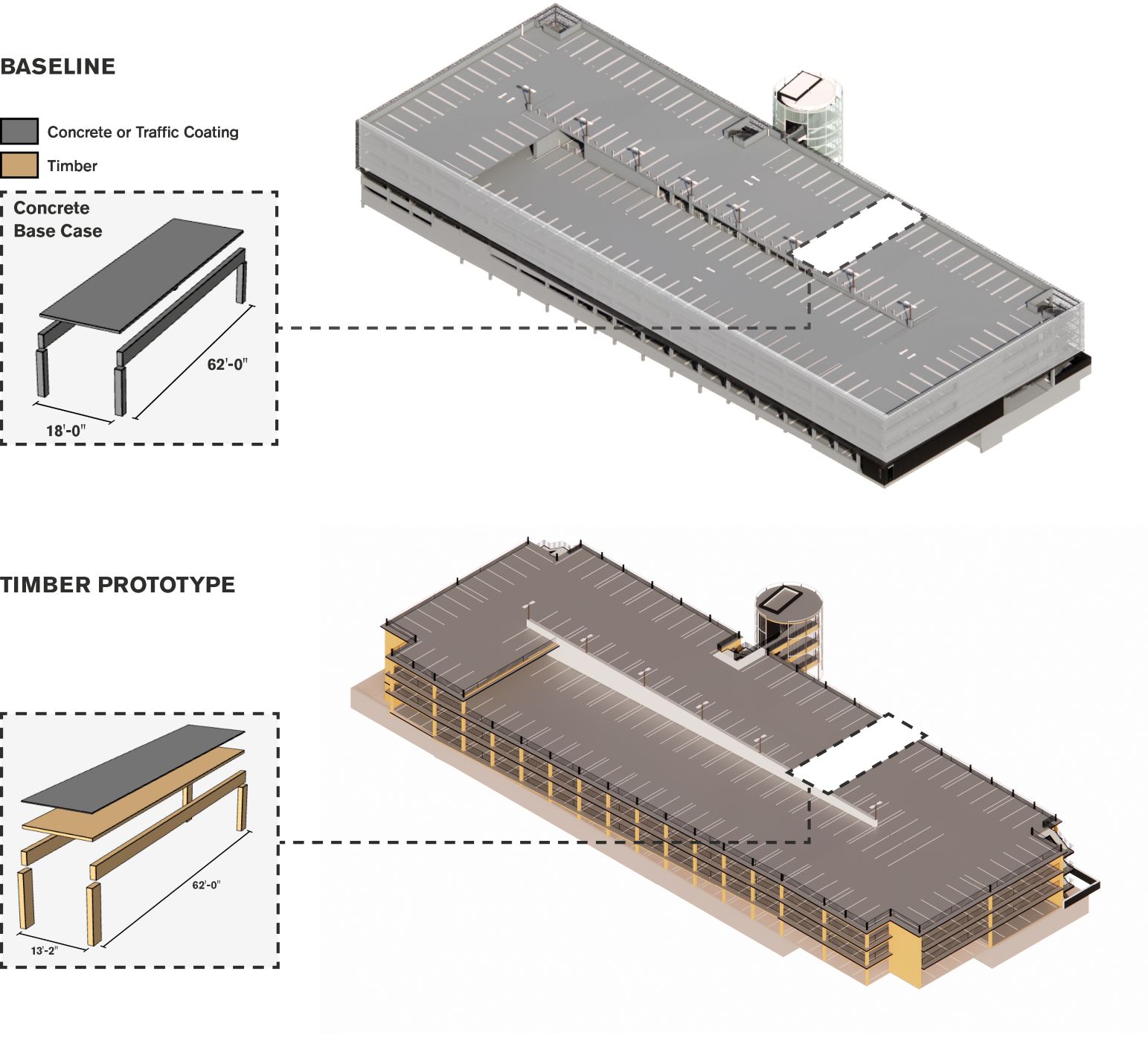
Prototyping for Efficiency
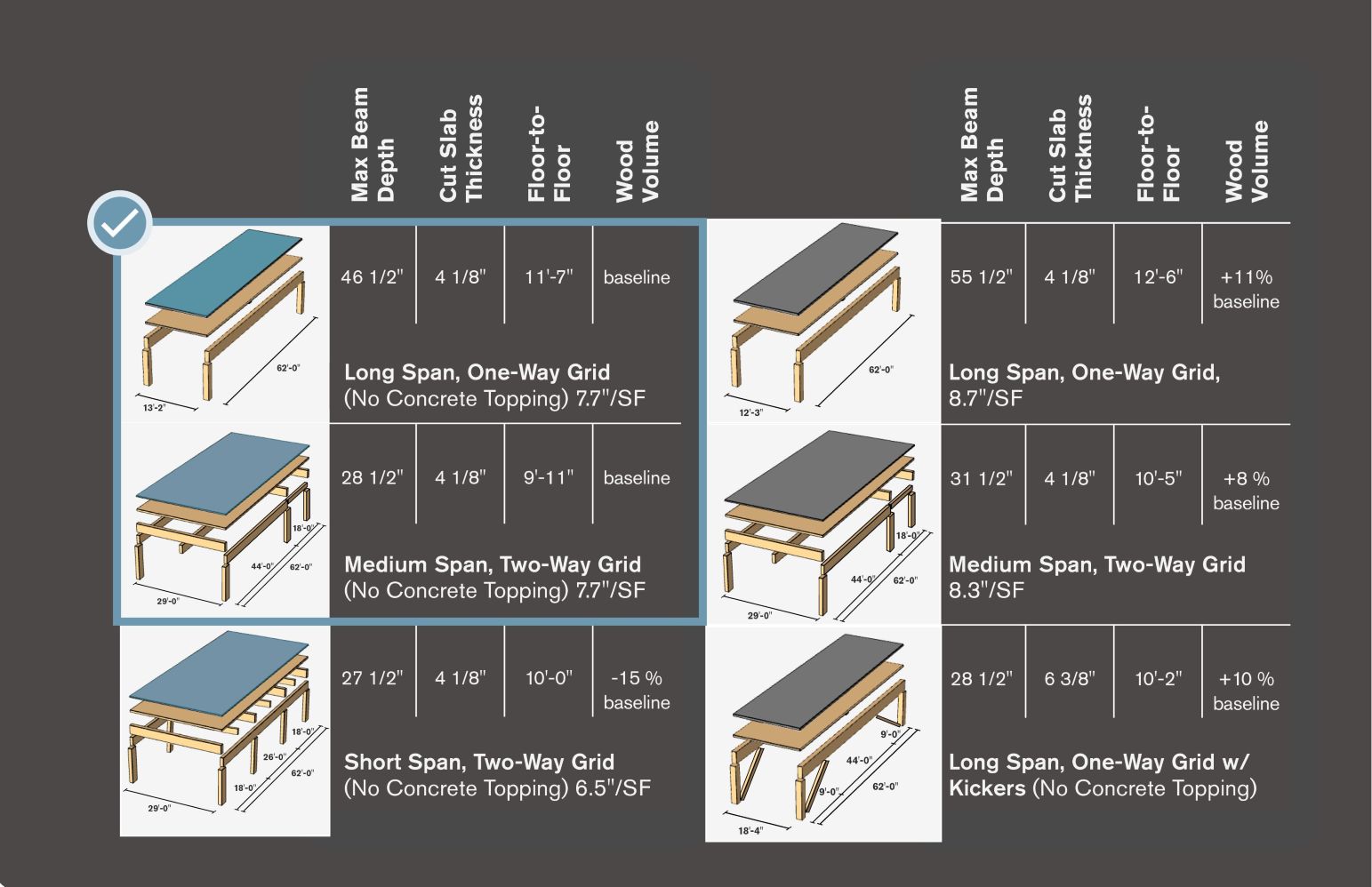
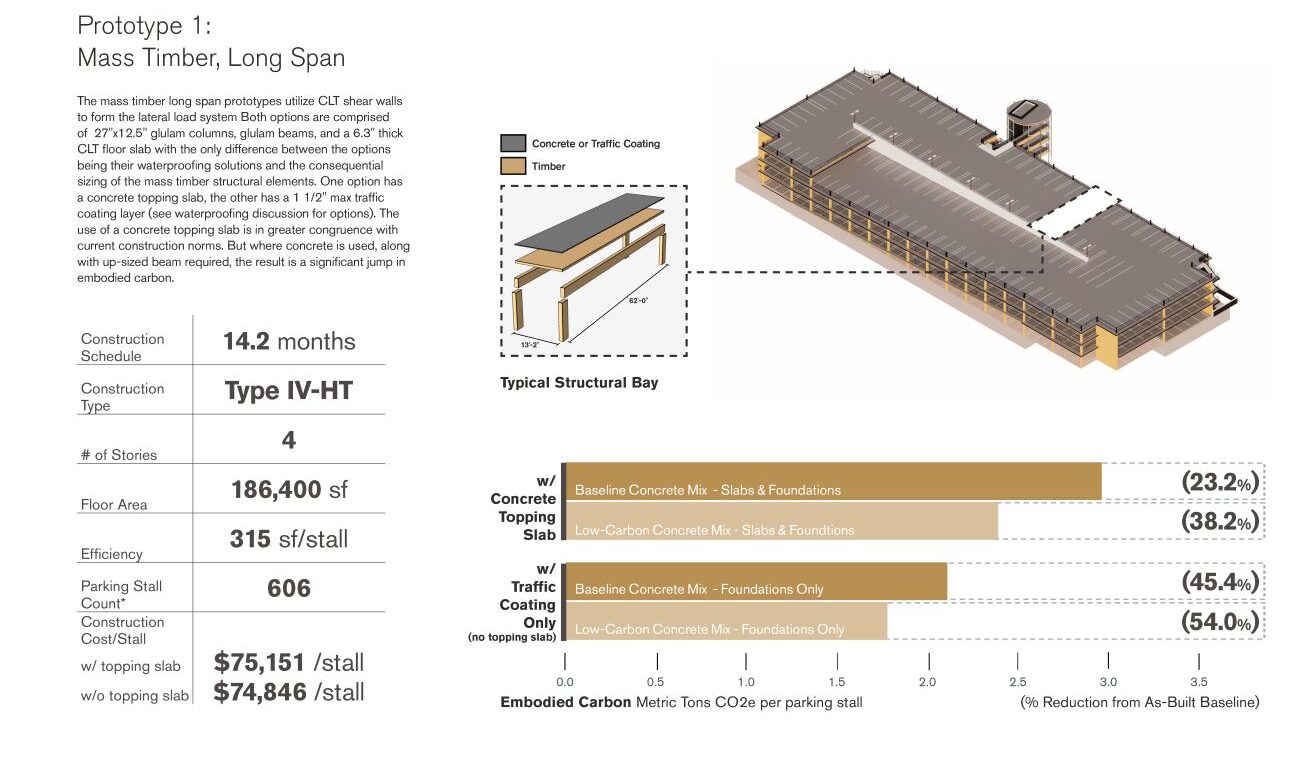
Mass timber framing configurations were tested to balance structural depth, floor-to-floor height, and wood volume with the overall parking experience of a user. While a long span system maximizes parking flexibility and sight lines, it drives up the beam depth and floor-to-floor height. Including columns along one side of the drive aisle (“medium span”), provides a good overall balance of efficiency, adaptability, and sustainability. Both long span and medium span systems were evaluated across carbon, cost, construction duration, and spatial efficiency.
Carbon, Code, and Cost
Embodied carbon can be reduced by up to 50%, driven primarily by replacing concrete slabs with timber. The building code (IBC) will allow up to six stories with 144,000 square feet per story for a total of approximately 2000 cars. Costs increase modestly in the range of 14–19%. The cost premium can be reduced by minimizing applied façade systems and expressing the wood structure as the visual signature of the building.
Performance Considerations
Parking structures must meet a consistent set of requirements regardless of material. As part of the study, each system was evaluated against core performance criteria including safety, durability, waterproofing, efficiency, and structural stability. The analysis asks whether mass timber can meet these expectations within current standards.



Fire safety is a fundamental concern in parking structures due to open floor plates, limited compartmentalization, and concentrated fuel loads. Traditionally addressed through non-combustible concrete construction, mass timber relies on controlled charring to preserve structural capacity, raising the question: can mass timber parking structures be detailed, protected, and approved to perform at a equivalent level?
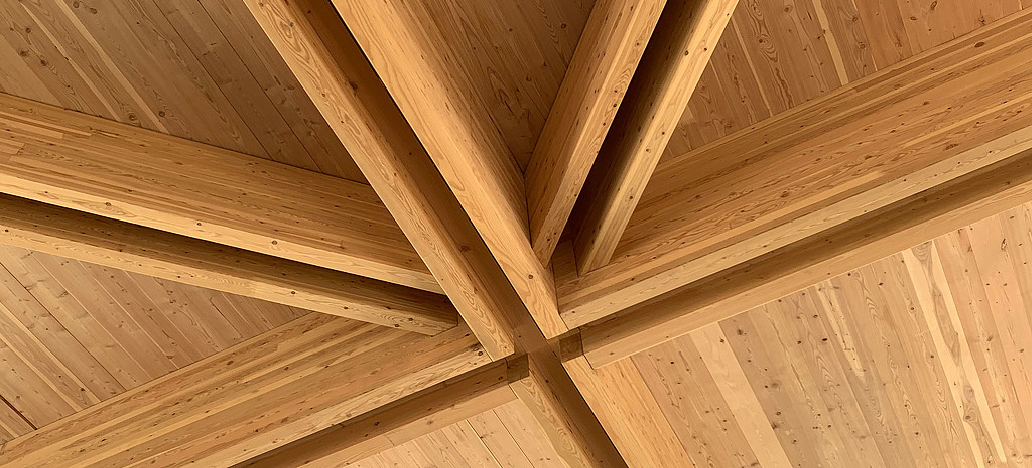
With its high strength-to-weight ratio and fire-resistive behavior, mass timber has demonstrated long-term durability, with some wooden structures standing for centuries. In parking structures, where outdoor exposure and limited maintenance are common, durability depends as much on material as on the detailing. How can mass timber be detailed to achieve durability performance comparable to the current structures?
Parking layouts, floor-to-floor heights, column spacing, and usable square footage intersect to control the number of parking stalls that can fit inside a parking structure. Contemporary parking structures house approximately 1 car/300-350 sf of floor area. How will long-span timber effect parking ratios and efficiencies?
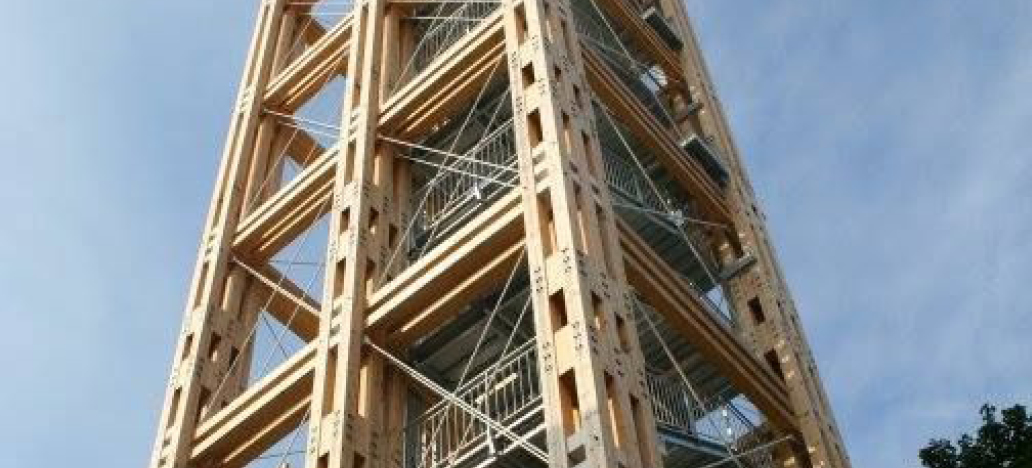
The lateral force-resisting elements of tradition cast-in-place concrete, post-tensioned concrete, and steel structures are well-defined. Shear walls, brace frames, and moment frames afford various limitations and efficiencies. How can mass timber performance compare under the various vibration, earthquake, and live loads experienced within a parking structure?
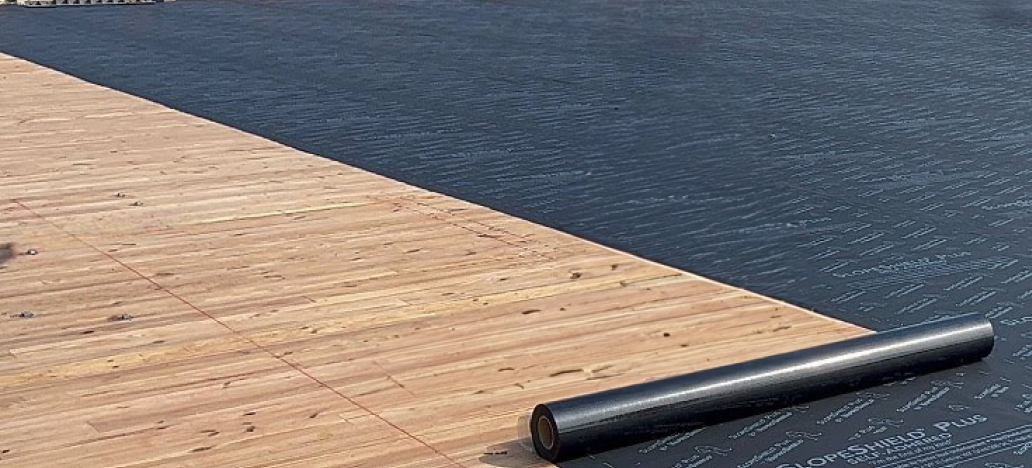
Weather exposure, to precipitation and sun in particular, is a constant concern in parking structures, traditionally managed in concrete garages through sloped decks, drainage, and protective coatings. As mass timber is naturally absorptive, while remaining exposed and expressive, can it be detailed and sealed to manage moisture at acceptable levels?
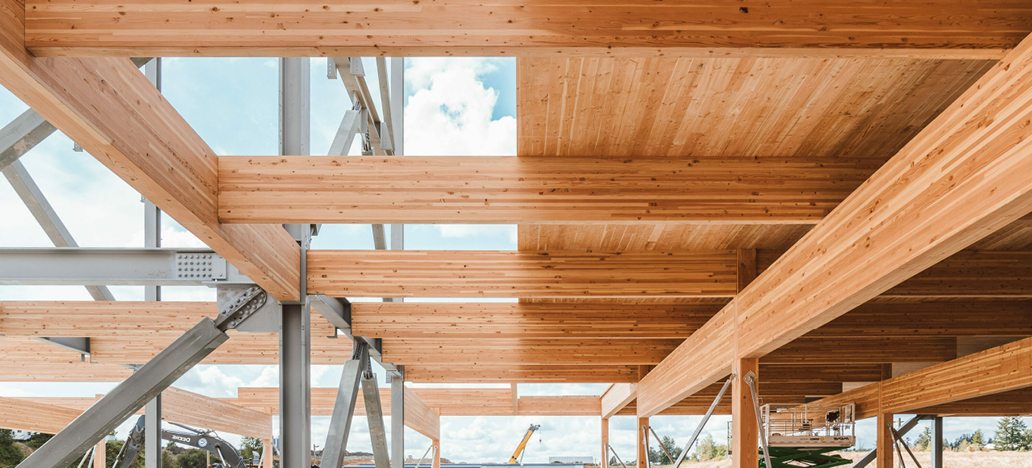
Adaptability is an increasing concern for parking structures as long-term demand becomes less certain. While post-tensioned concrete systems are difficult and hazardous to modify, mass timber’s kit-of-parts construction enables disassembly and reconfiguration. Can mass timber structures adapt more readily to future uses than concrete systems?
Adaptability: Design for change
With over 2 billion parking spaces in the United States, even a small shift in how these structures are designed has significant implications. This study explores adaptability as part of the typology itself. Mass timber’s kit-of-parts construction allows for disassembly, modification, and reuse, making future change more feasible than with post-tensioned concrete systems. As part of the study, we explored floor-to-floor heights, ramp removal or reuse, utility flexibility, component disassembly, and two housing conversion scenarios. Together, these tests frame the parking structure not as a fixed endpoint, but as a building that can evolve.
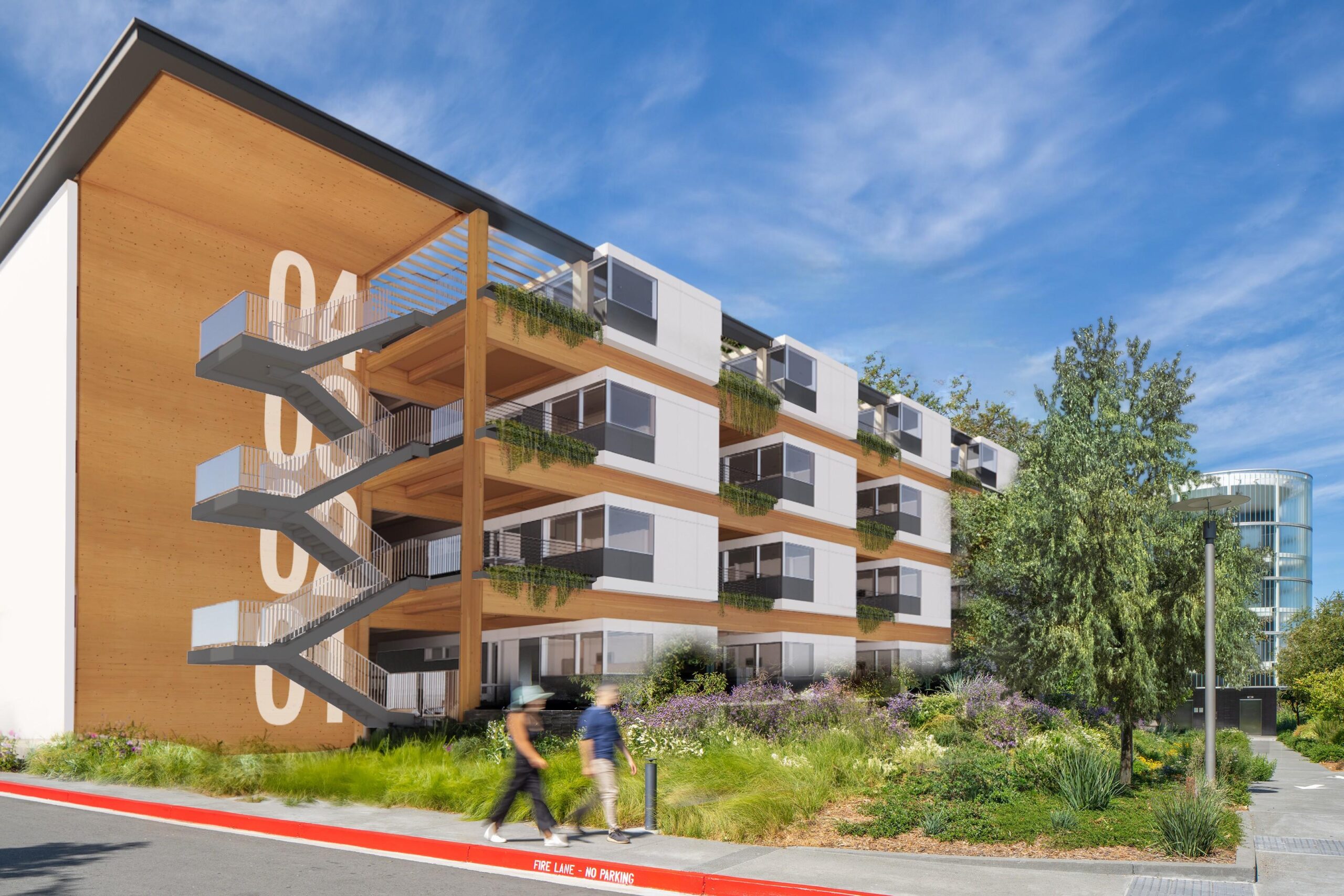
“Mass timber is not a speculative alternative. It is a technically viable structural system for contemporary parking structures in the United States. The study demonstrates that a free-standing mass timber parking structure could meet current performance requirements while reducing embodied carbon and improving long-term adaptability.”