[APRIL 2, 2026] — From the floor of the International Mass Timber Conference, Mad River Mass Timber, in partnership with WRNS Studio, Team Projects, and Forell | Elsesser Structural Engineers, has launched a research and concept study advancing a regenerative supply chain for multifamily housing in California.
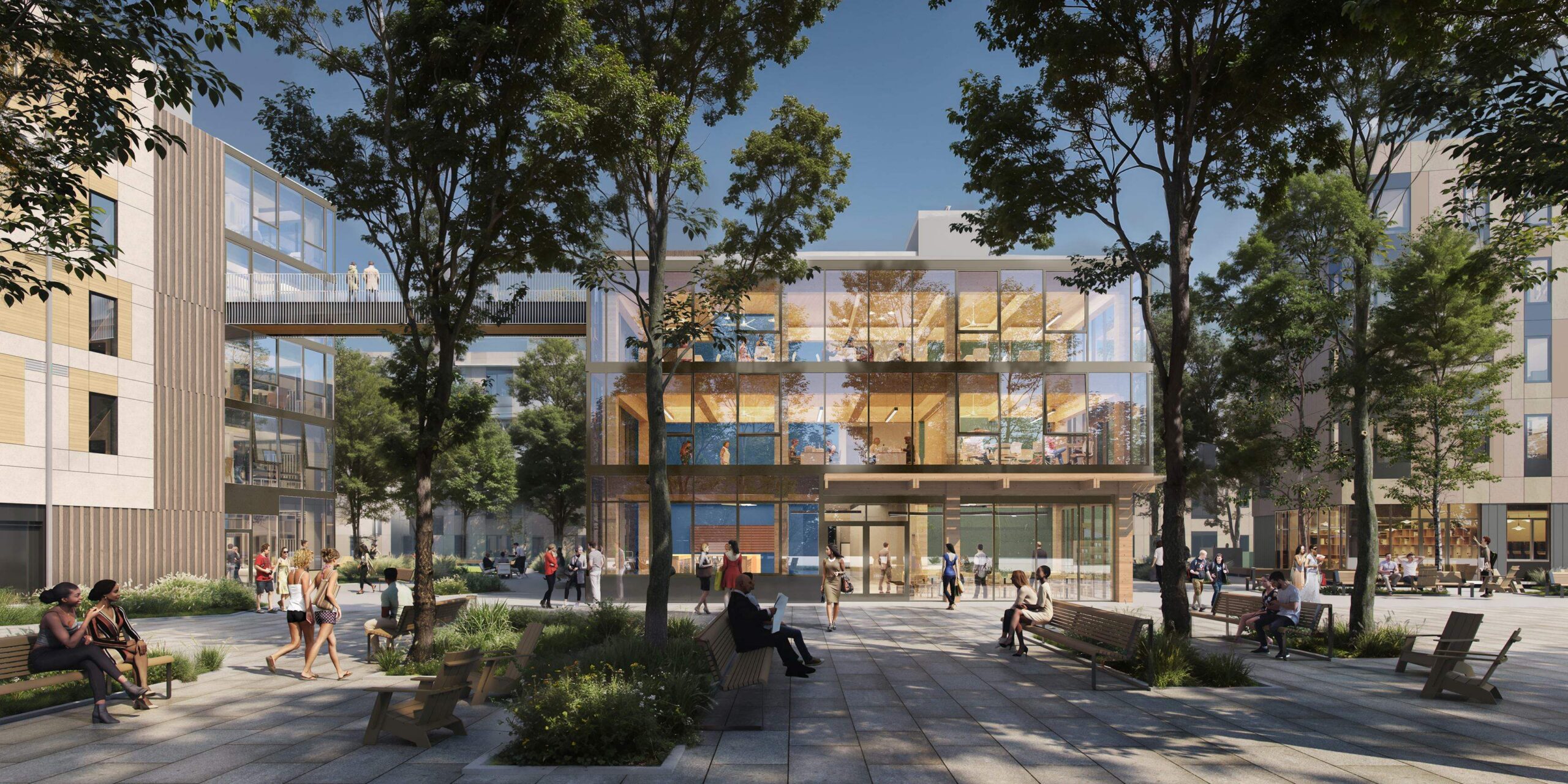
The collaboration brings together a vertically integrated timber supplier, developer/construction manager, architect, and structural engineer to test how dowel-laminated timber (DLT) can be deployed in real-world housing. Using an 88-unit multifamily development in Oakland as a pilot, the team will develop and evaluate hybrid structural approaches for broader application.
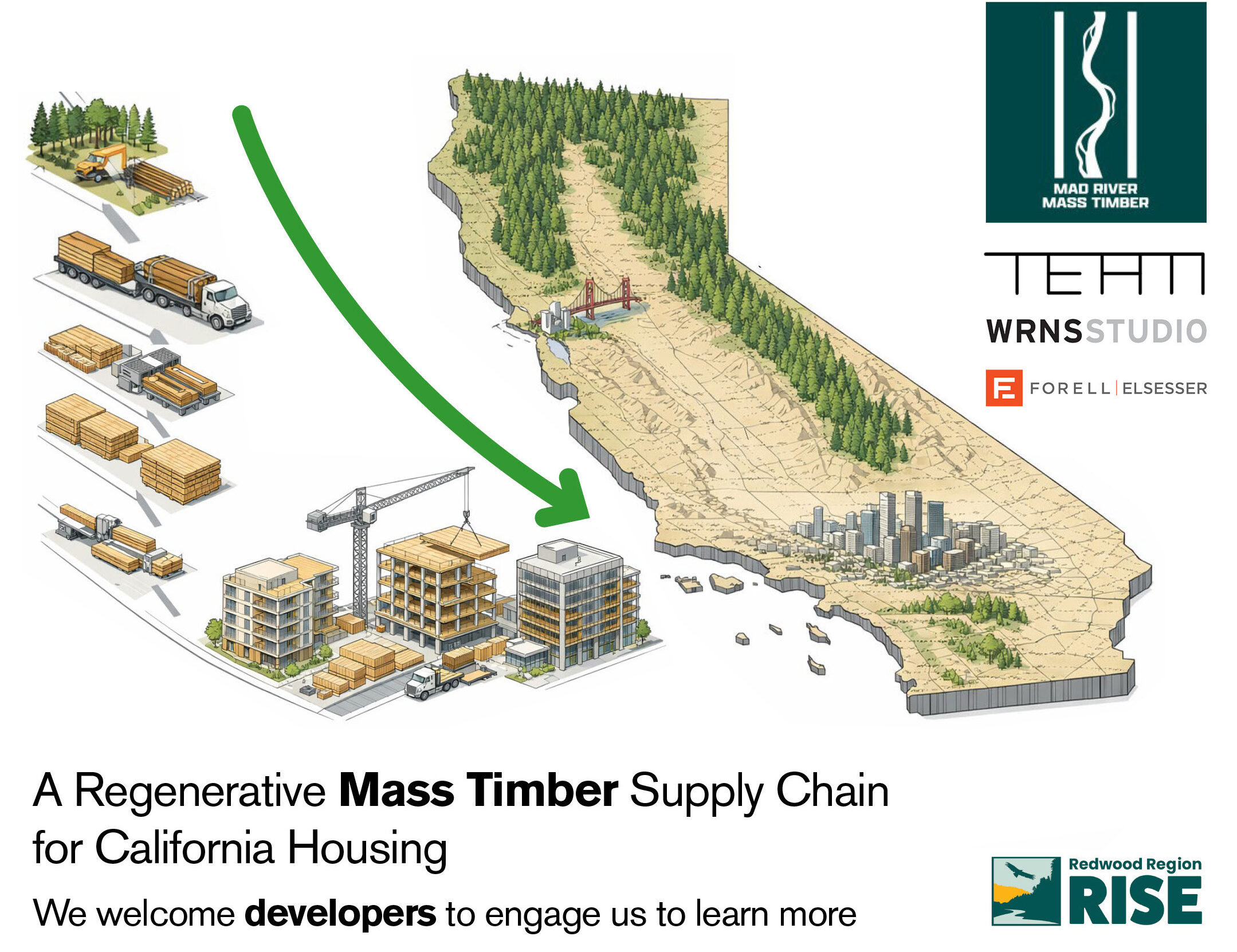
At the center of the effort is a model that links forest health with housing delivery. Mad River Mass Timber transforms low-value wood from wildfire mitigation, forest restoration, and Tribal forestry into prefabricated building systems—connecting California’s forest resources to urgently needed housing. WRNS, Team Projects and Forell’s multi-family and mass timber experience makes an ideal team to take on this challenge.
The study will focus on DLT as part of a hybrid structural system within Type III, IV, and V construction; prefabrication strategies to improve speed, cost, and quality; and code pathways for wider adoption. The research effort will also imagine alternative residential scenarios that are possible on the site with different unit mixes and product types to pressure-test baseline assumptions. Grounded in an active development project, the effort moves beyond theory to test practical, repeatable solutions.
The study will be developed with the guidance of a Peer Review Advisory Board, assembled by WRNS, Team Projects and Forell, including a range of reputable developers, builders and mass timber experts. Their input throughout the process will be channeled into specific design exercises, to address pain points and challenges currently faced in multi-family development.
“We want to reduce the barriers to incorporating mass timber into more projects, by showing the benefits in space, time, cost and interior experience that are possible,” said Ben Mickus, Partner, WRNS.
Findings will be shared with industry partners, agencies, and policymakers, as a playbook to support broader adoption of mass timber housing across California.