Kona Farm Distillery Hospitality through the art of making
- Client Confidential
- Location Kailua-Kona, HI
- Size 10,000 sq ft on 7.5 acres
- Completion 2025
- Program Coffee processing facility and distillery, visitor’s center, tasting room, commercial kitchen, open and private offices, parking spaces
- Sustainability LEED Silver
- Delivery Design-Bid-Build
- Photographer Jason O'Rear
- Awards AIA Honolulu Award of Excellence - Commercial/Industrial (2026)
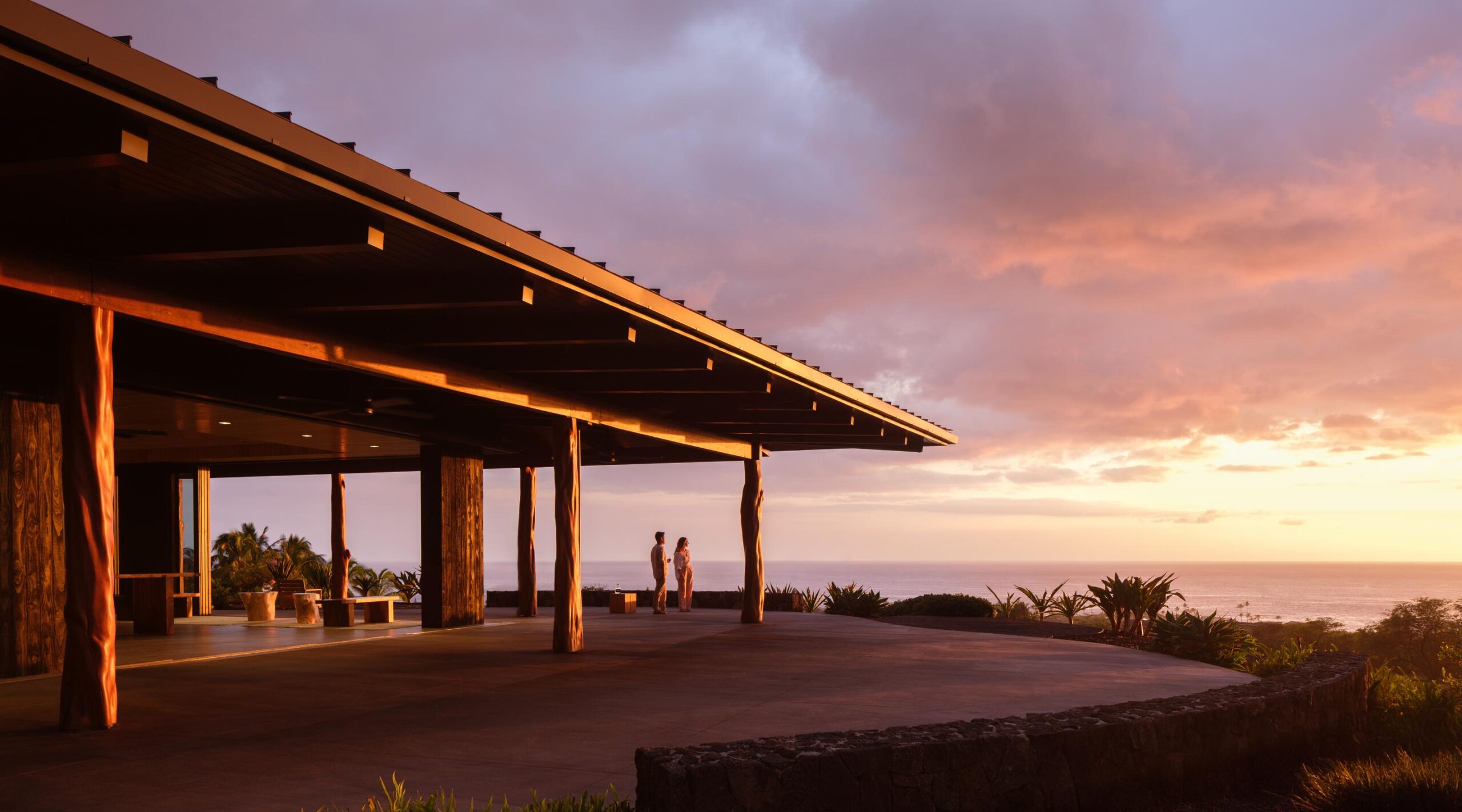
Kona Farm is a tasting room, lab, and working farm—both a hospitality experience and a tribute to Hawai‘i’s land and culture. Every detail celebrates not only the product, but the craft of making in this place.
A copper still, a stunning site, and an open brief
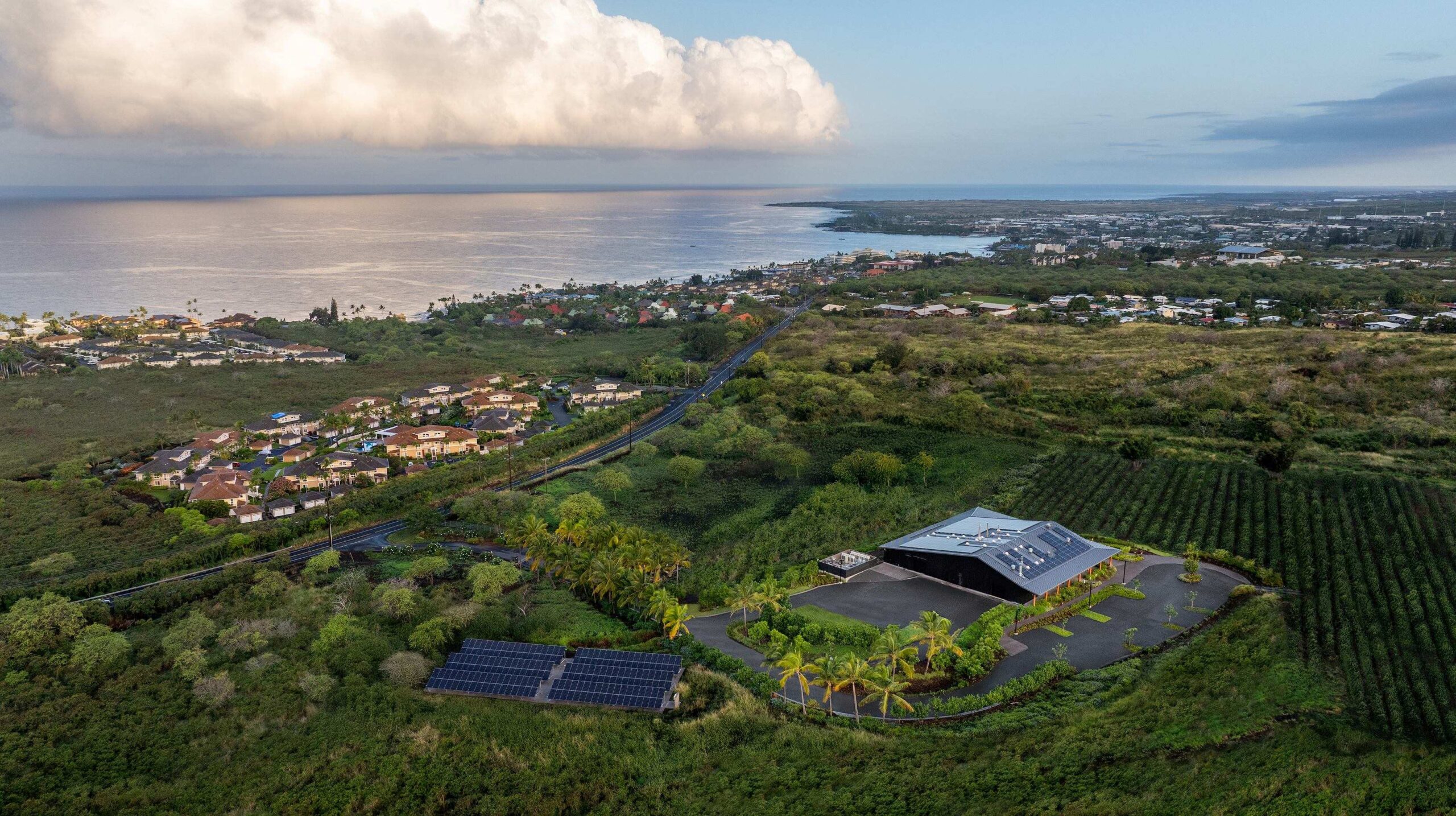
This project began with a copper still purchased before design began and housed in a shipping container on a 71-acre volcanic farm property south of Kailua-Kona. The design brief was open-ended: create a destination for immersive tasting experiences rooted in local ingredients like coffee cherries, pineapple, ti plants, and native botanicals—yet to be identified. The space needed to remain flexible enough to support an evolving product while delivering a site-specific experience visitors wouldn’t forget.
A choreographed arrival
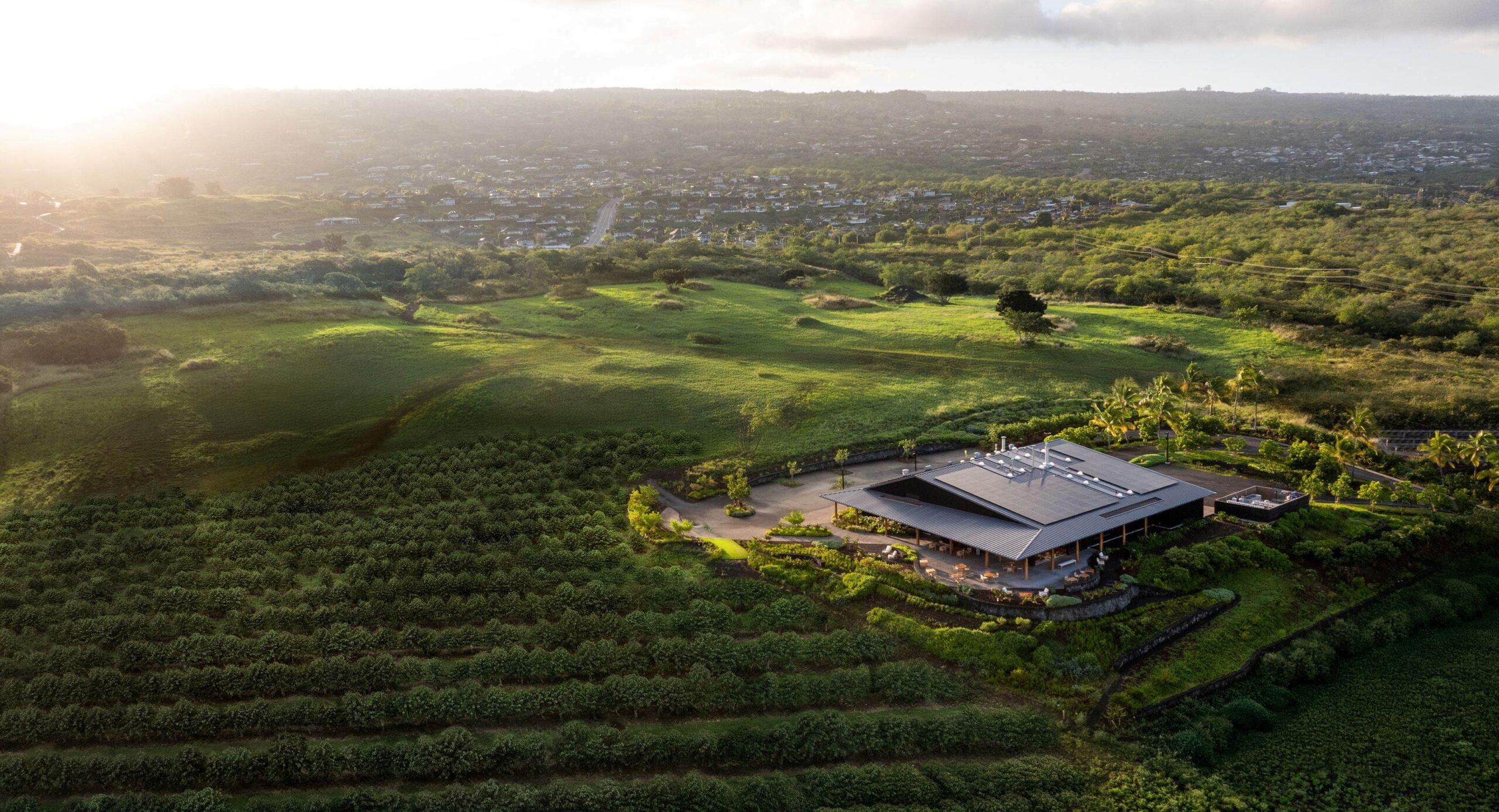
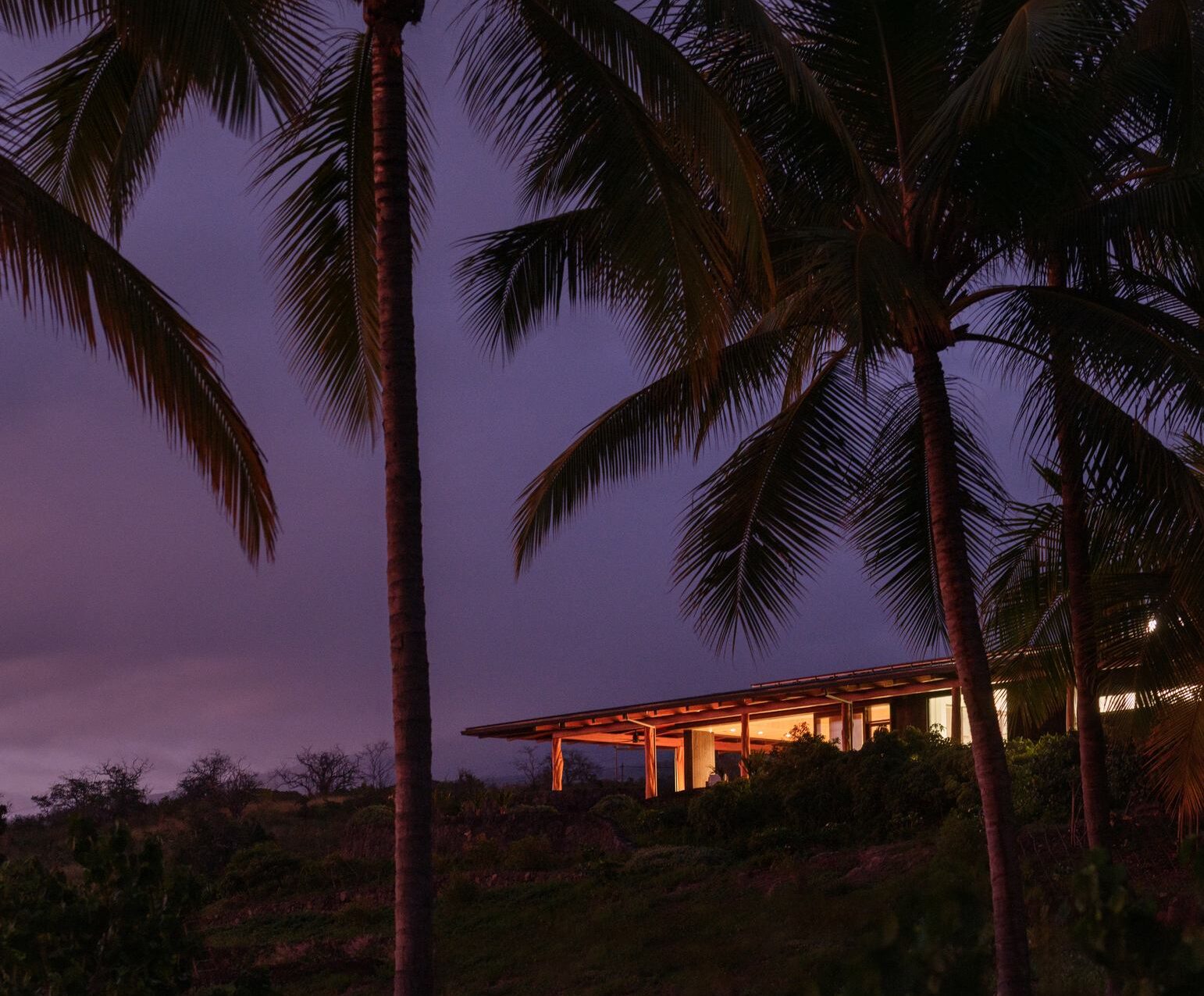
The site, once an orchid farm, sits along the edge of the Kona coffee belt, at an elevation celebrated for its sweeping ocean views, temperate breezes, and well-draining volcanic soils—ideal for growing high-quality crops with nuanced flavors. The project occupies seven acres of the working farm and demonstration landscape. Visitors arrive along an orchard-lined drive, experiencing the farm and surrounding landscape as glimpses of the tasting room emerge through a funnel of coconut trees.
Elemental, local, and timeless
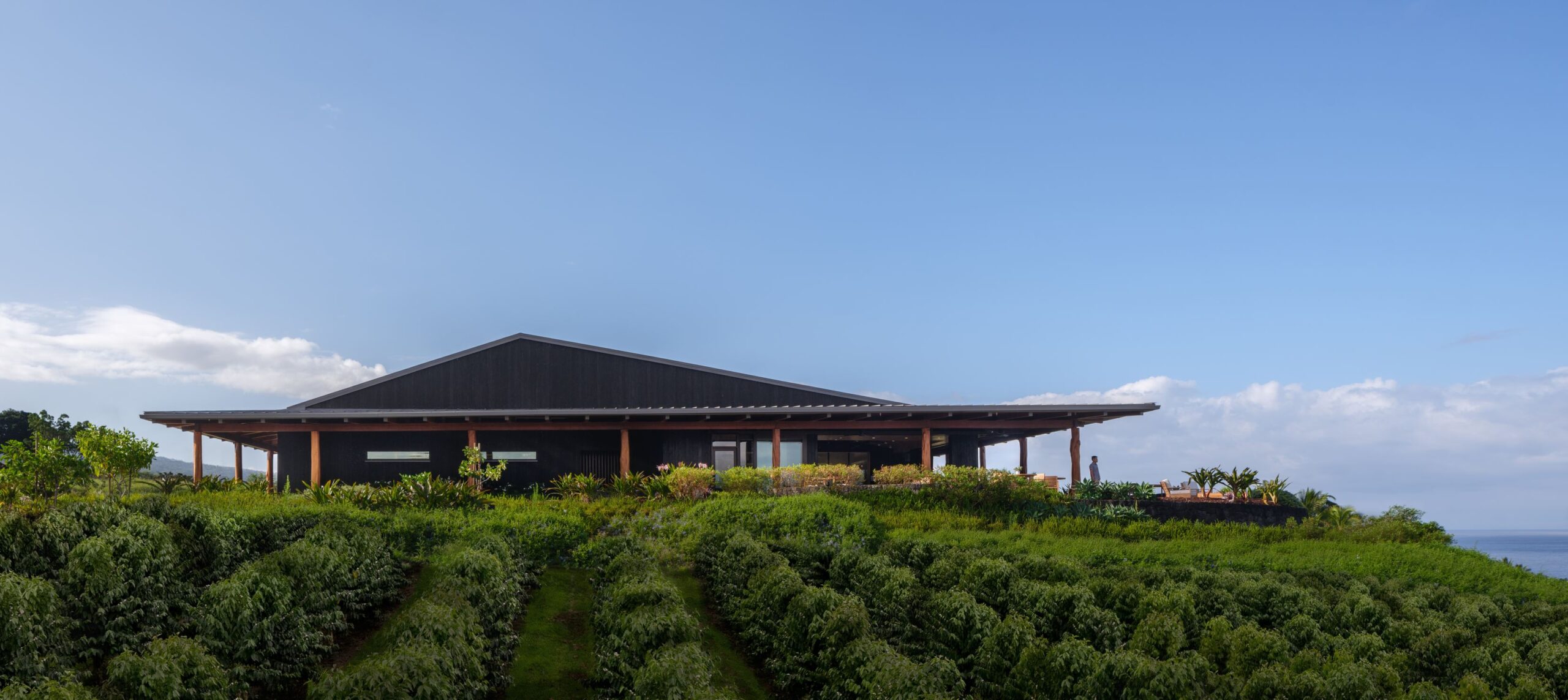
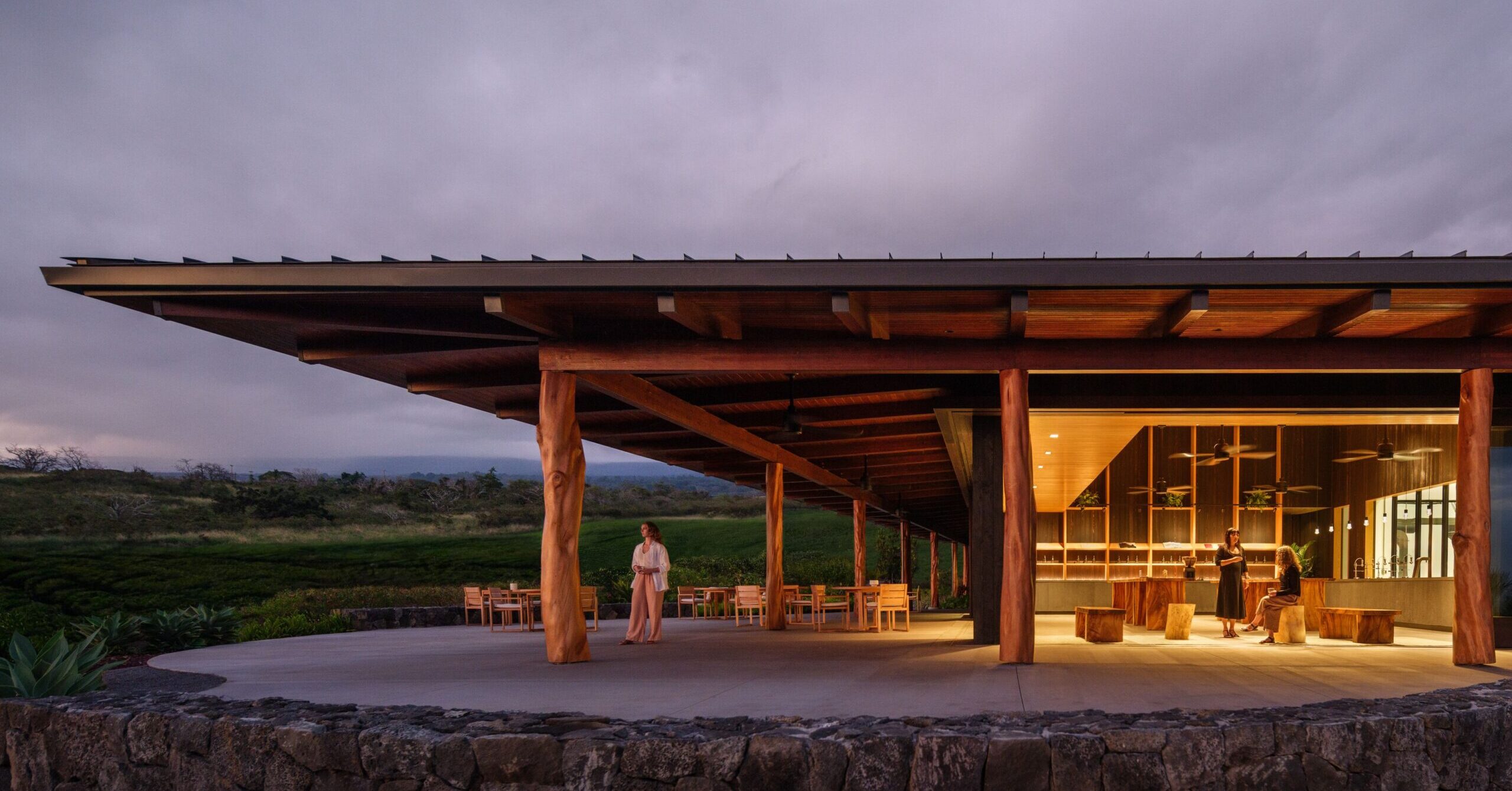
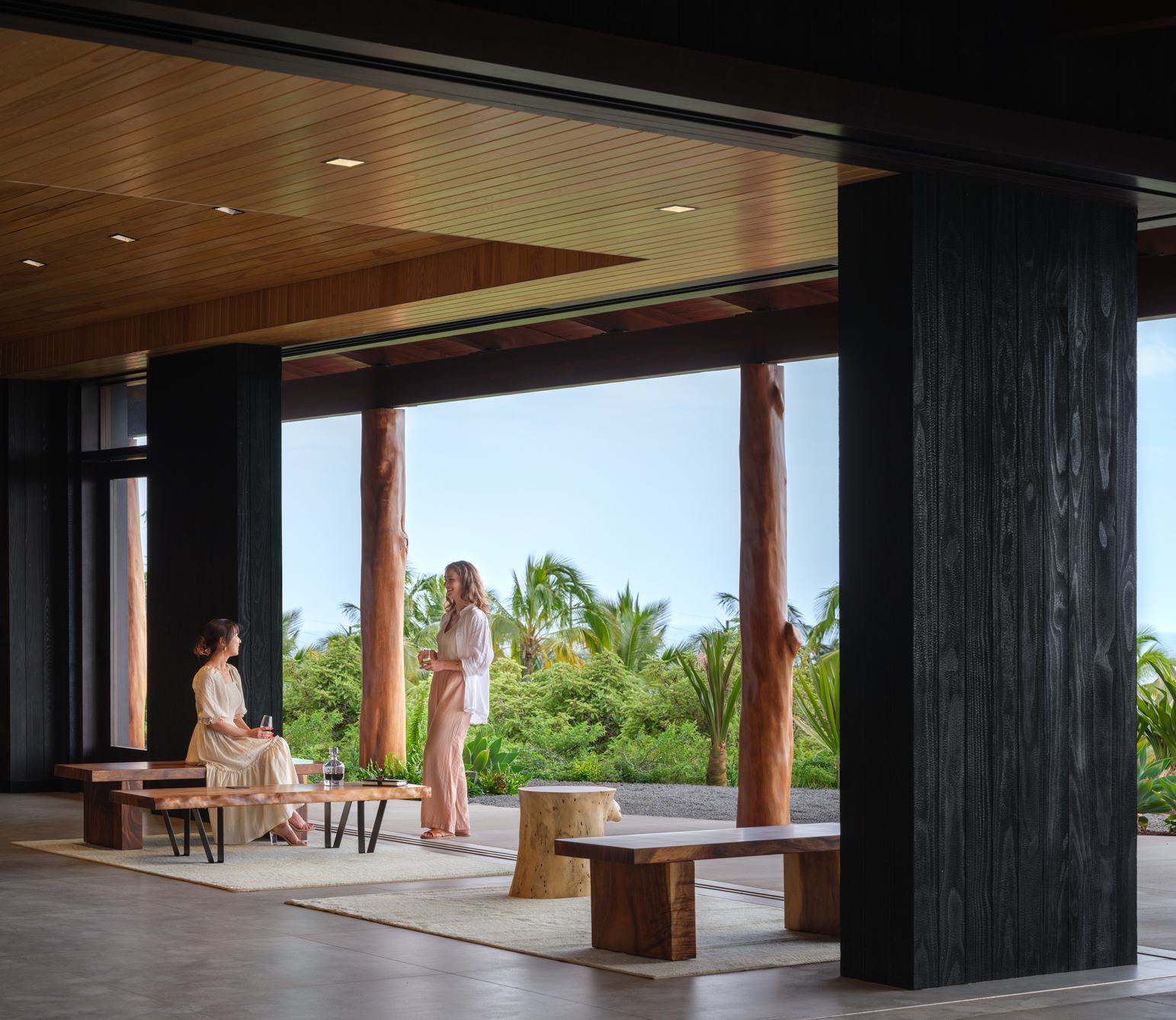
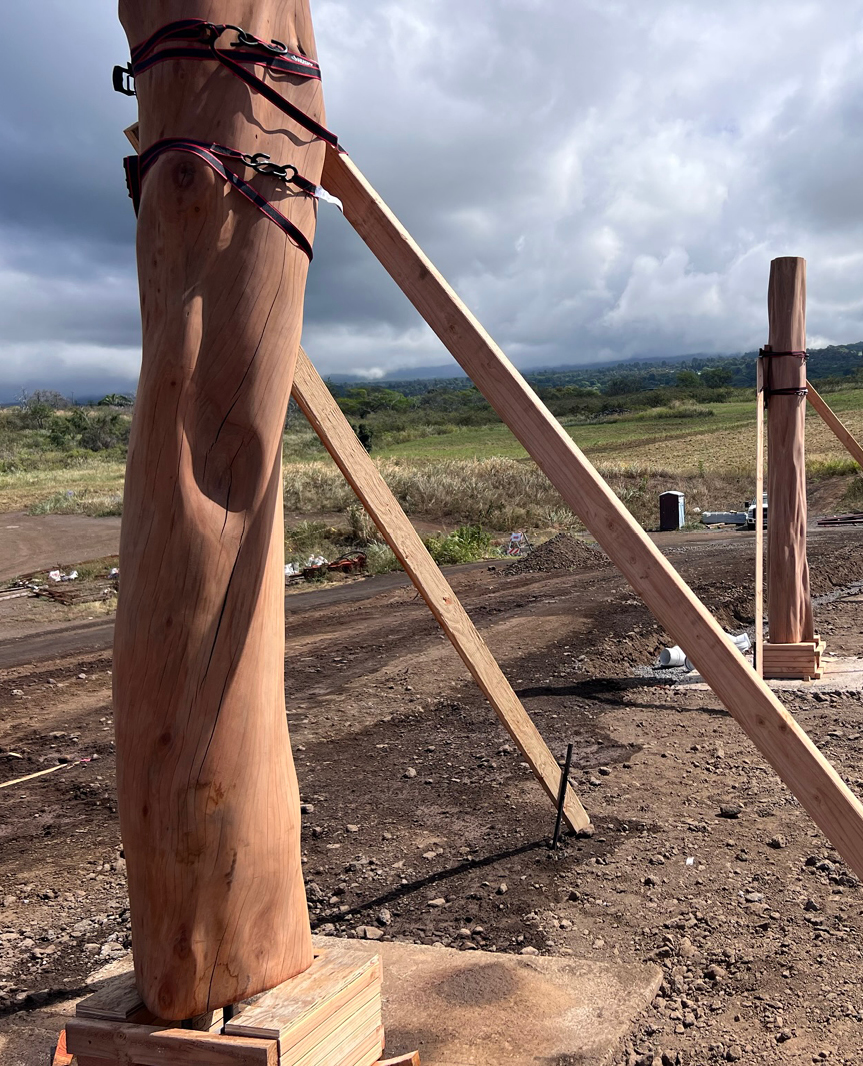
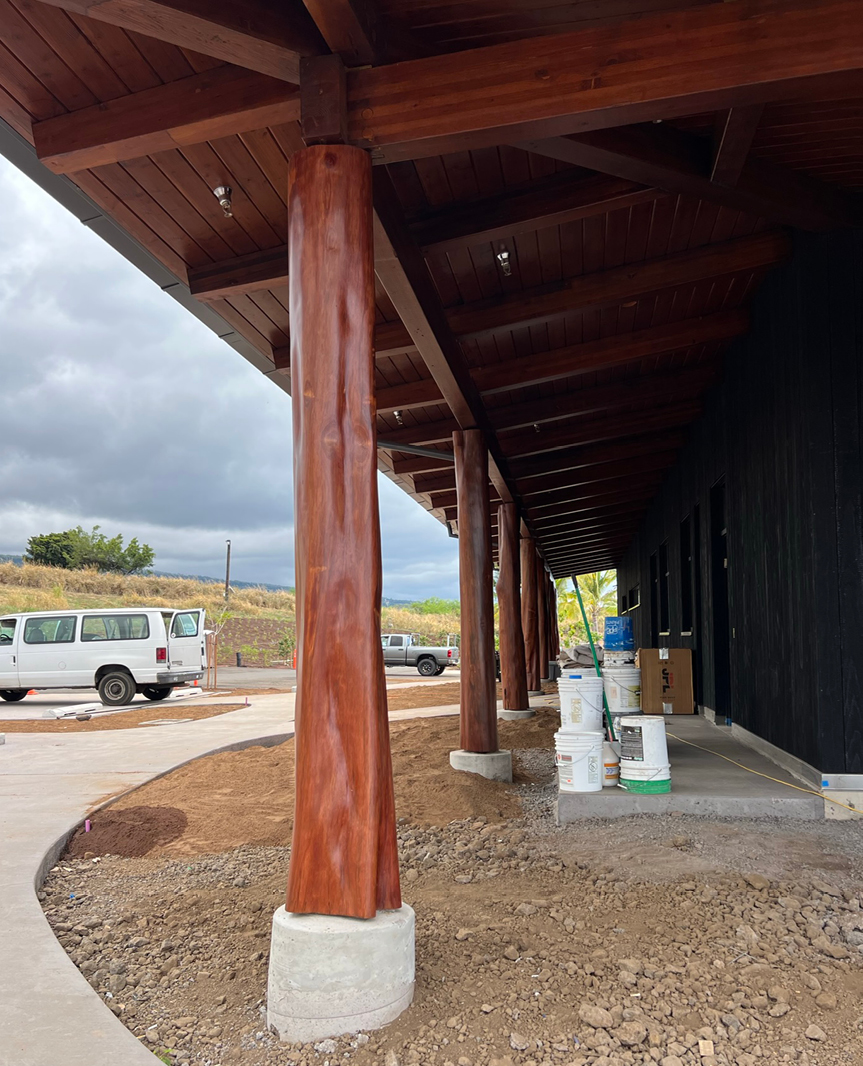
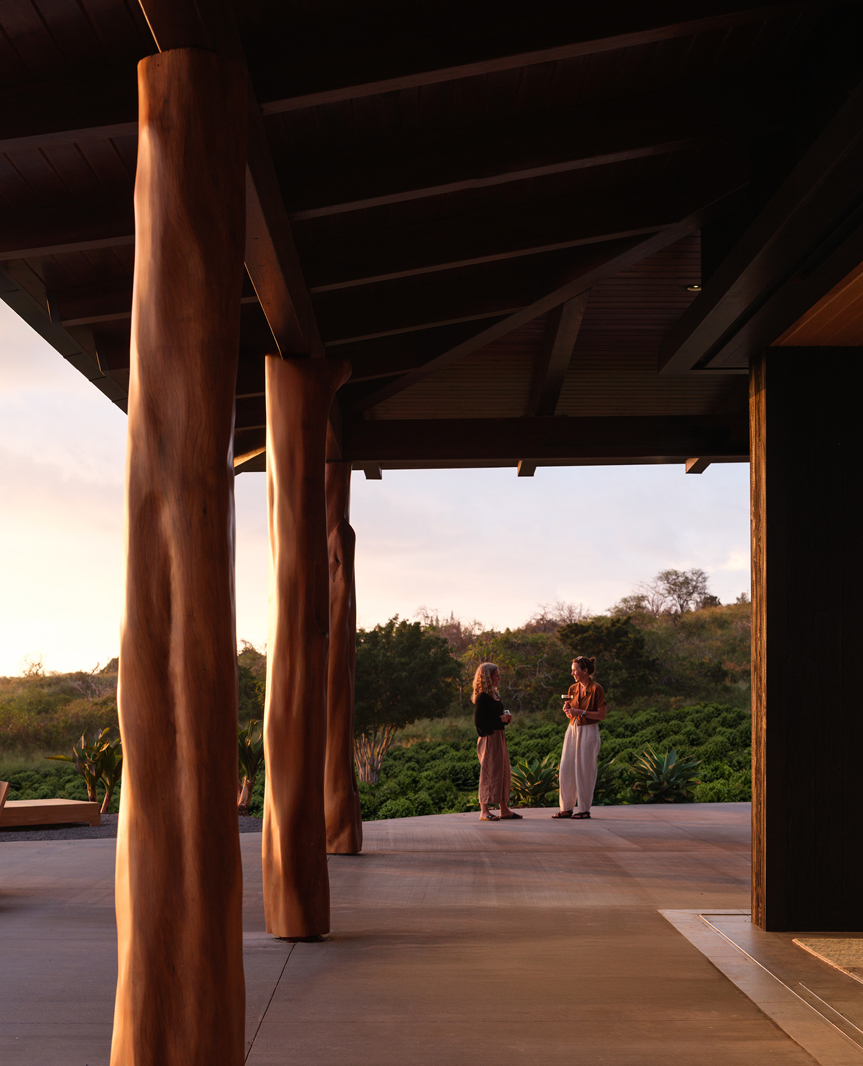
The building’s massing and orientation respond to multiple demands: to tread lightly on the land, frame views, open generously for production, and scale down for intimate gatherings. Clad in shou sugi ban—a charred wood finish that resists termites, mold, and mildew, and fires—the exterior is durable and elemental while echoing the surrounding lava fields. The finish requires no paint or ongoing maintenance, ensuring long-term resilience. Hand-picked ‘Ōhi‘a columns—raw, sanded, each with its own grain and form—support a loggia that wraps three sides of the building.
A deep, sheltering overhang creates a shaded porch along the entry path, offering protection from sun and rain while framing views to the coast and the town of Kailua. Overhead, a bent double-hipped roof angles south and west—providing shade, maximizing solar exposure for photovoltaics, and contributing to a 50% reduction in energy use while evoking vernacular structures.
‘Ōhi‘a Wood Columns


Warmth and regional relevance
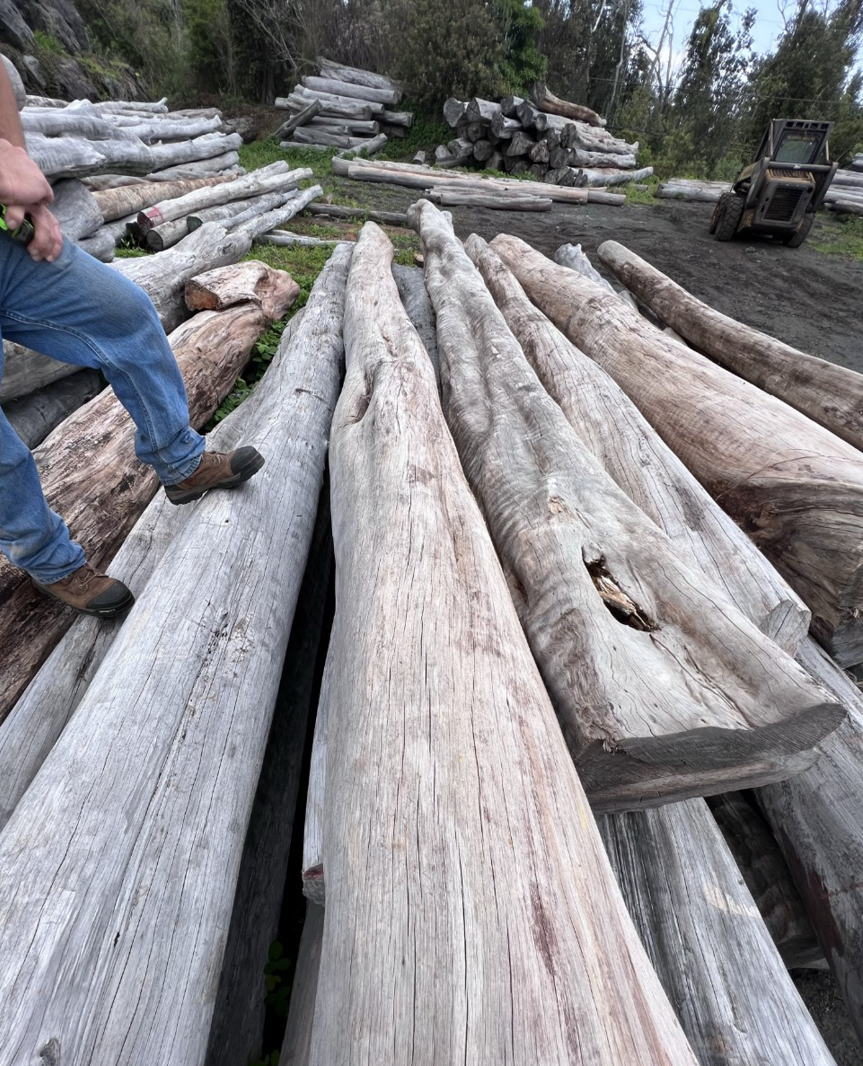
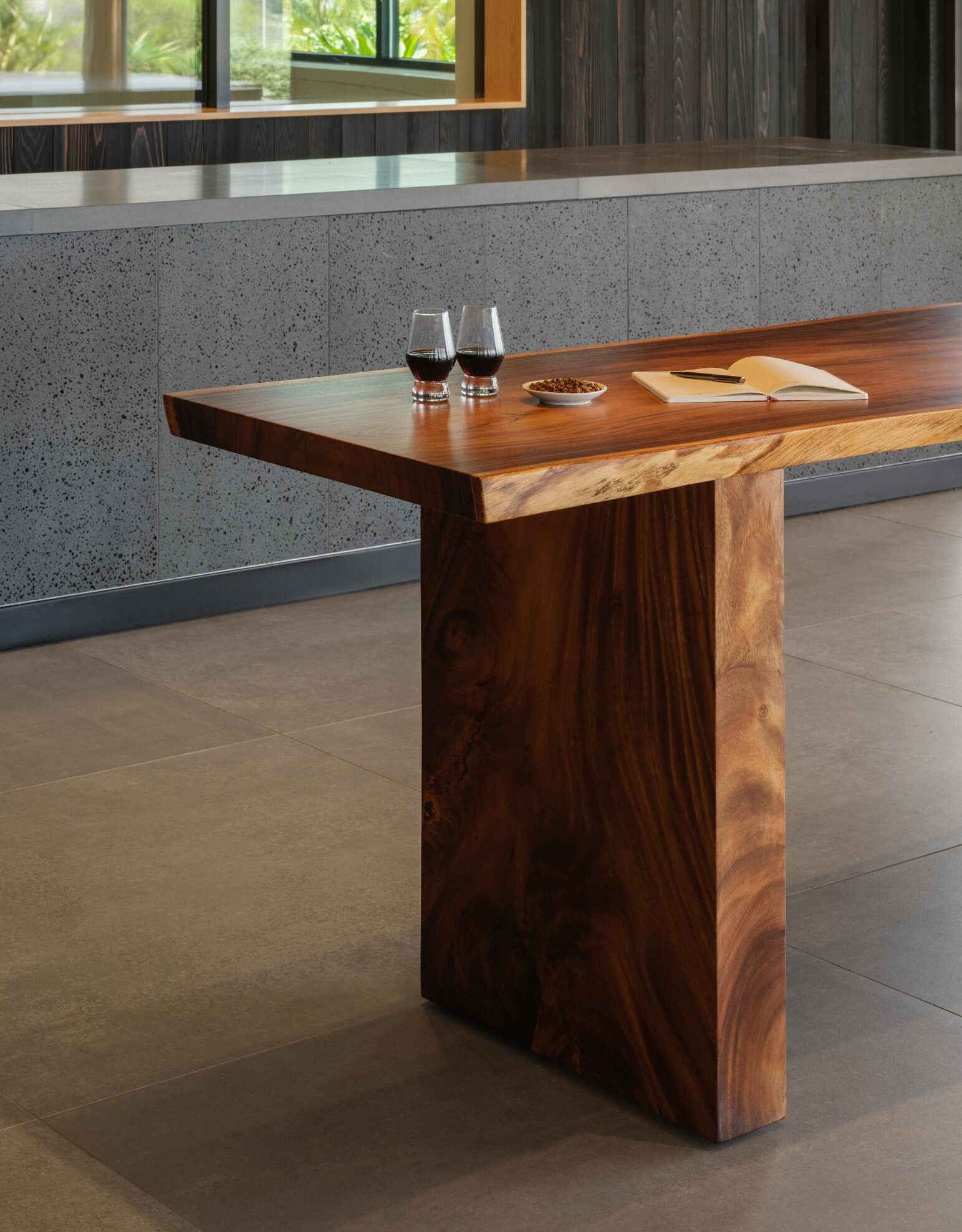
From the shaded loggia, visitors enter through sliding wood and glass panels into a vaulted space that opens dramatically to the Pacific. A low ceiling at the entry gives way to an expansive volume that draws in light and air. Large communal tables made of locally sourced monkeypod provide a center of gravity for casual gatherings and tastings.
Material warmth and regional specificity give the interiors a grounded, unpretentious elegance. Basalt appears in multiple finishes: smooth at the bar, rough at the fascia—each surface recalling the site’s volcanic origins. Smaller custom pieces and stools echo the forms of the surrounding forest. Materials allowed to express their inherent qualities. The palette—blackened wood, stone, copper, and warm tropical hardwoods—extends inside and out, ensuring a seamless experience.
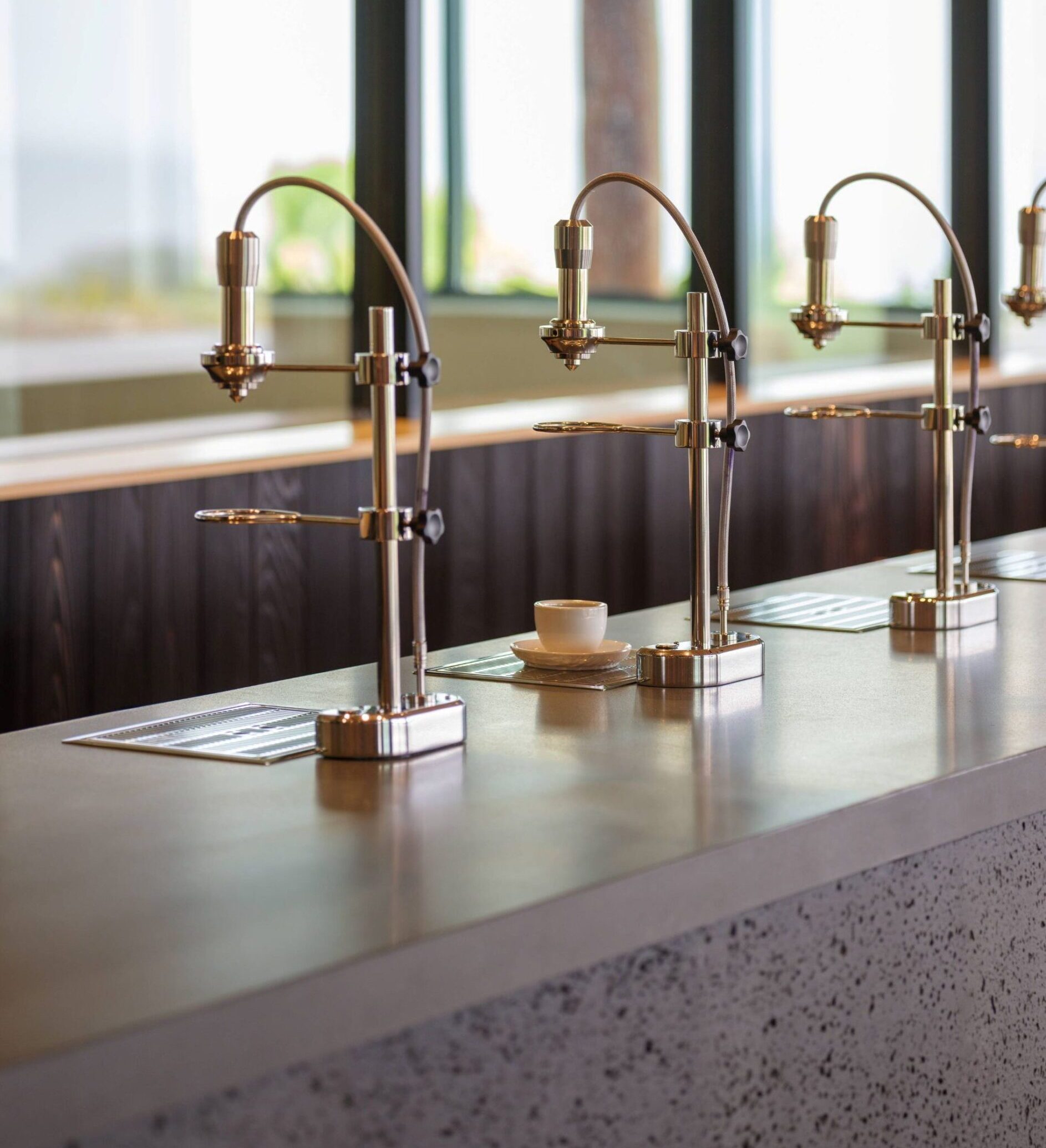
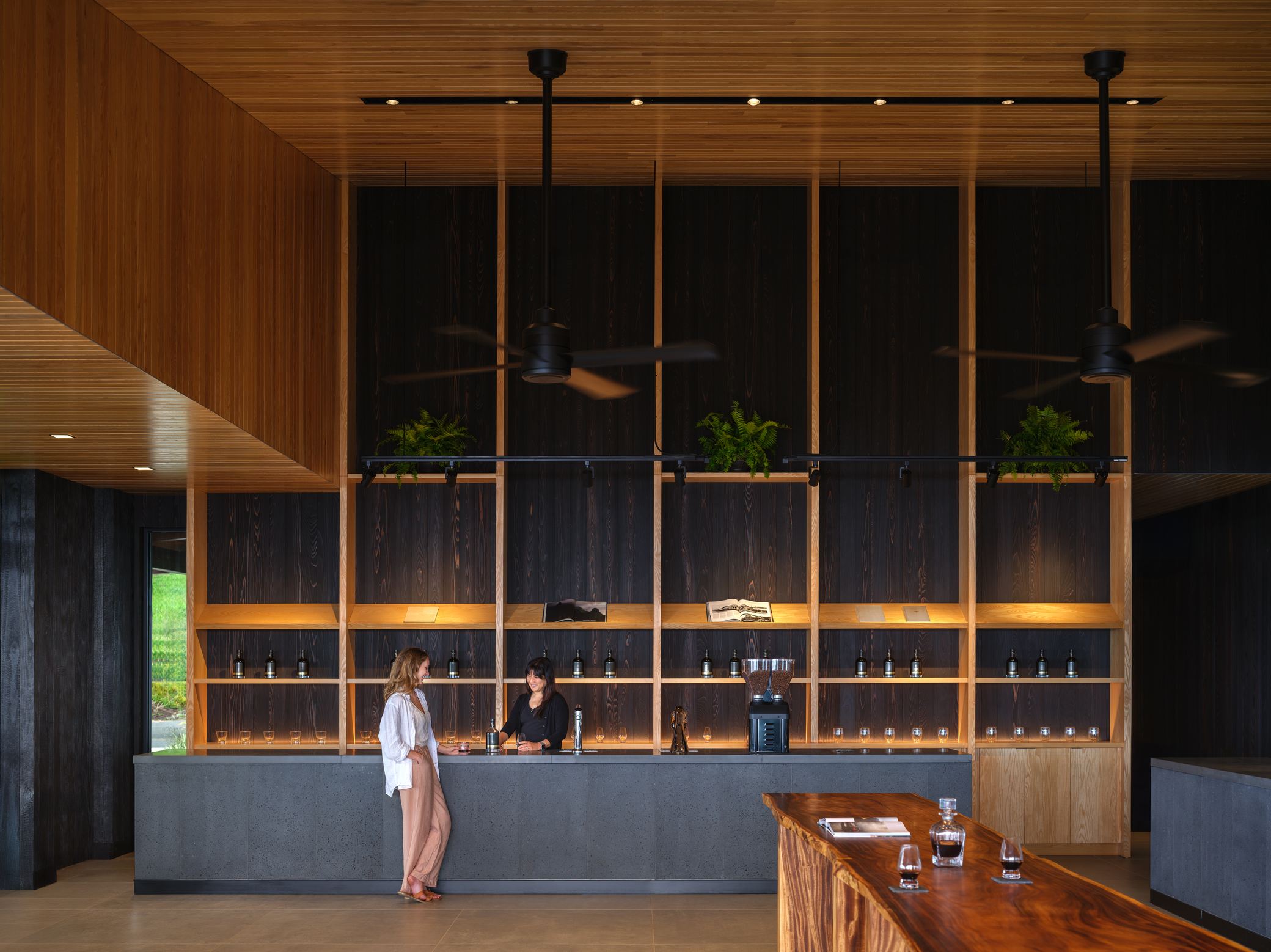
The tasting room: showcasing craft
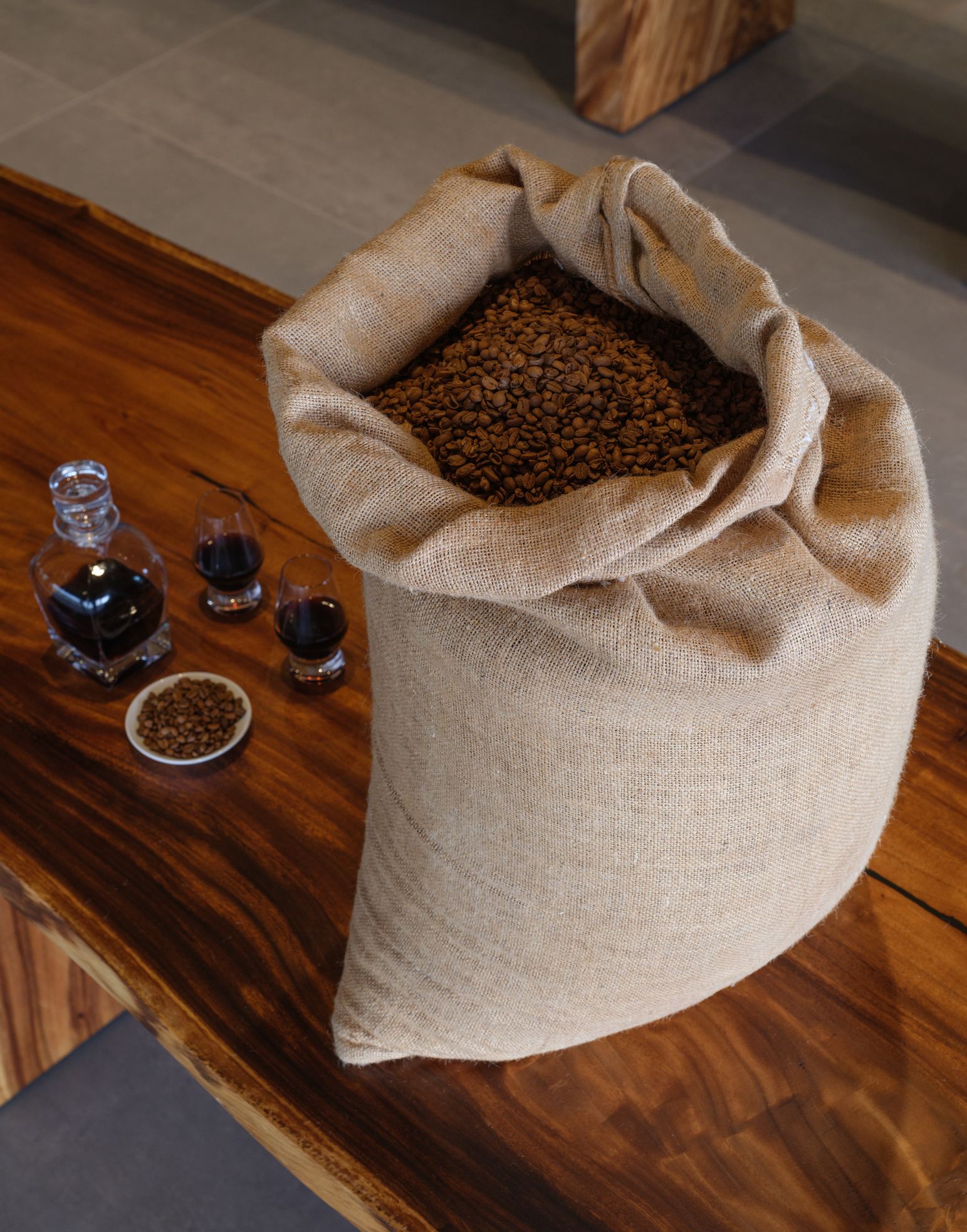
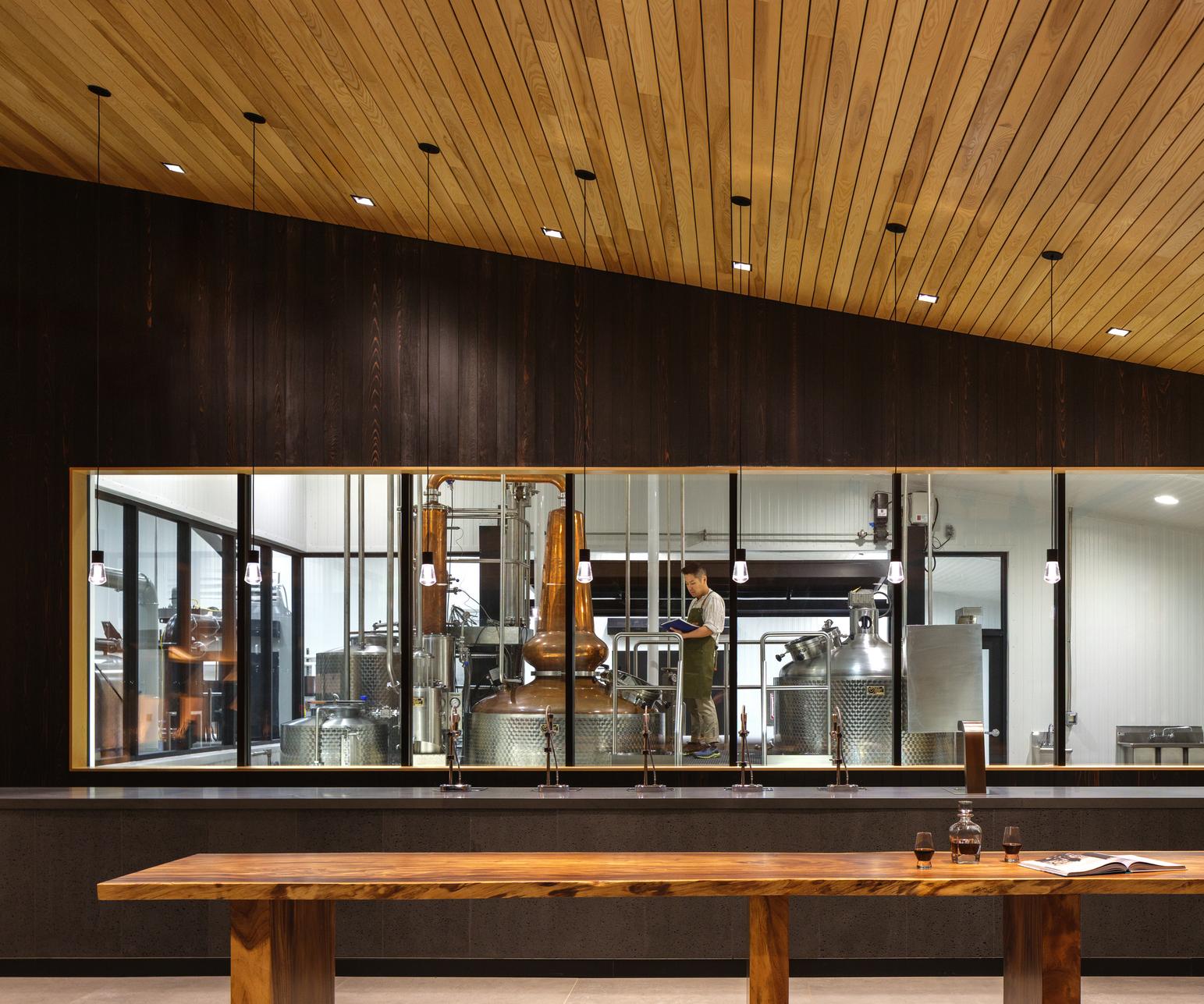
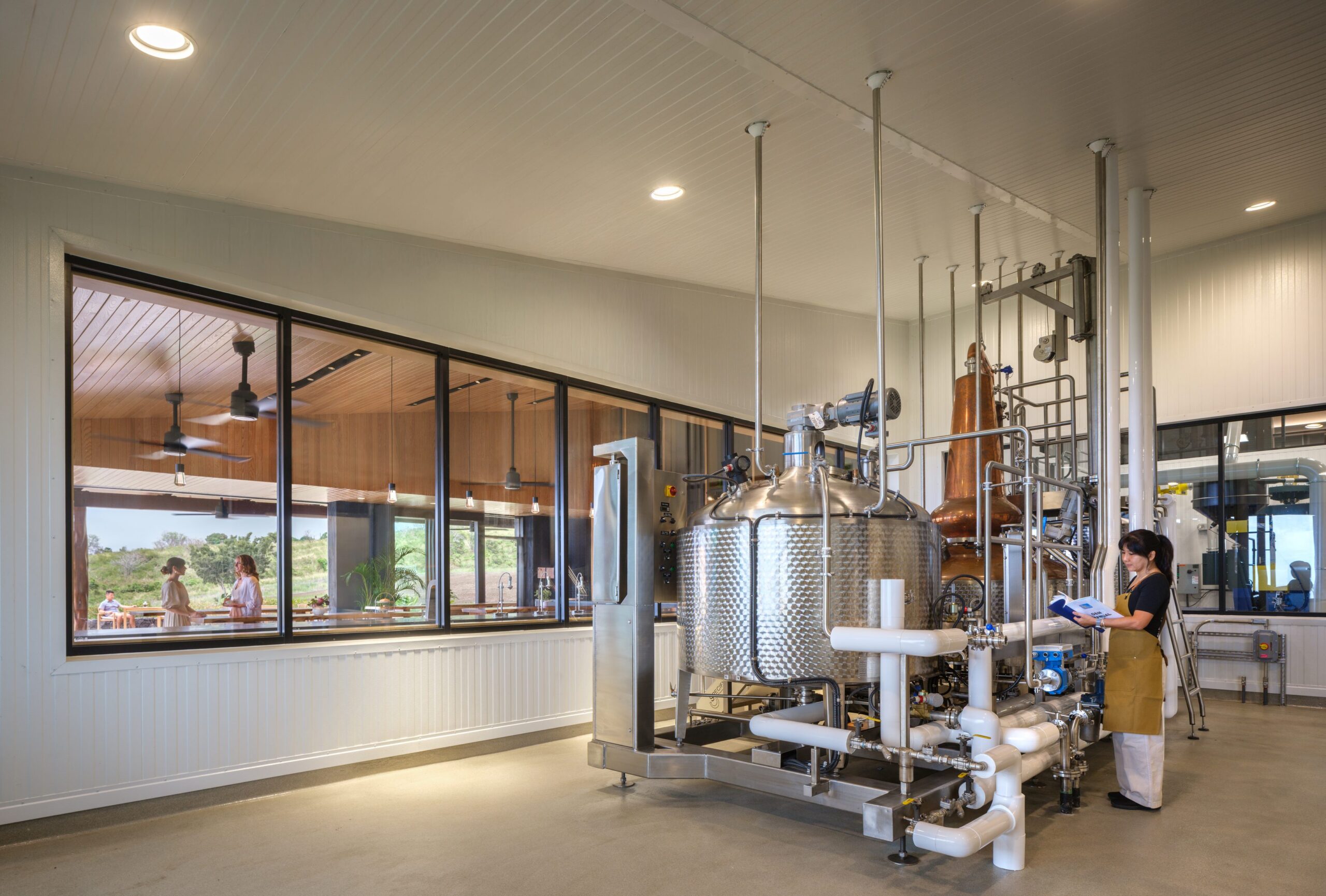
At the heart of the tasting room, the copper still takes center stage—encased in glass, framed by an oversized aircraft hangar door, and fully visible from the tasting room. Engineered to meet strict fire and health codes, the still room is as technical as it is theatrical, placing the act of making on full display. Visitors witness the process firsthand, connected to the craft behind each pour.
Beyond the glass, a larger production space supports the working distillery, allowing visitors to glimpse the full scale of operations while maintaining the efficiency required for daily production. This visual connection reinforces the building’s dual identity as both a working demonstration hub and an elevated hospitality experience. A second-story VIP lounge overlooks the production floor, offering guests a more intimate, elevated view of the distilling process.
Landscape as living lab for regenerative practices
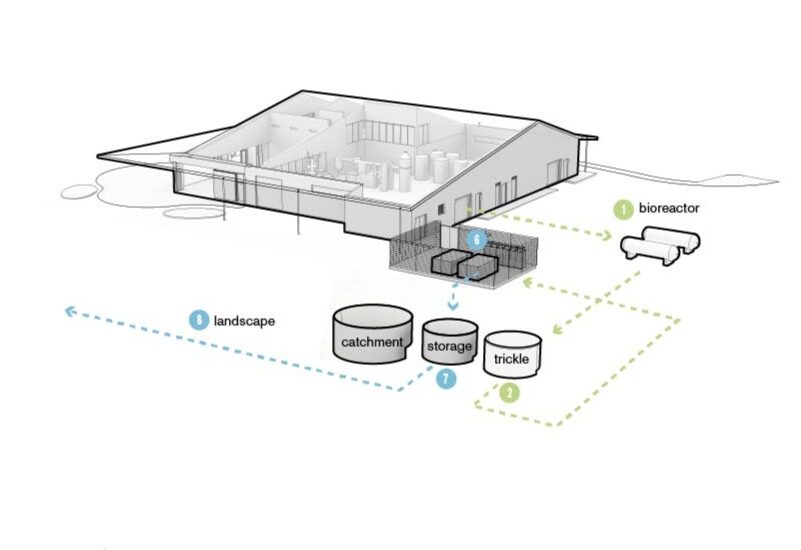
Adjacent gardens showcase native plants and local fruit trees, immersing visitors in the site’s agricultural story and creating a more direct “farm to table” experience as guests move toward the tasting room. Rainwater collected from the roof, along with reused process water from distilling, supports landscape irrigation—reducing potable water use by roughly 30%. Located below grade to address environmental concerns—including the threat of invasive species like cane toads—the system supports responsible water management while advancing sustainable production practices.